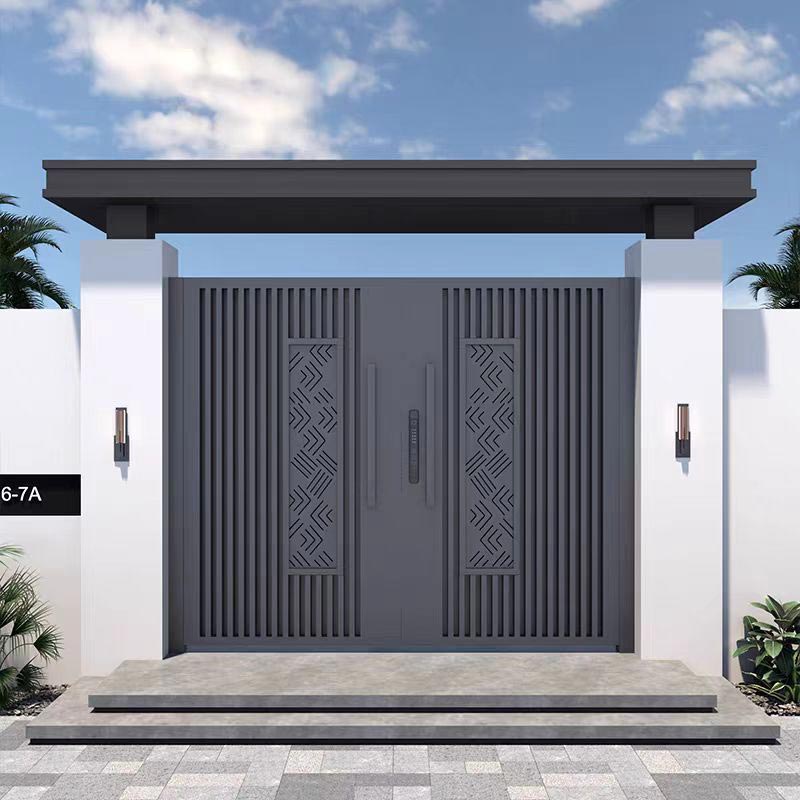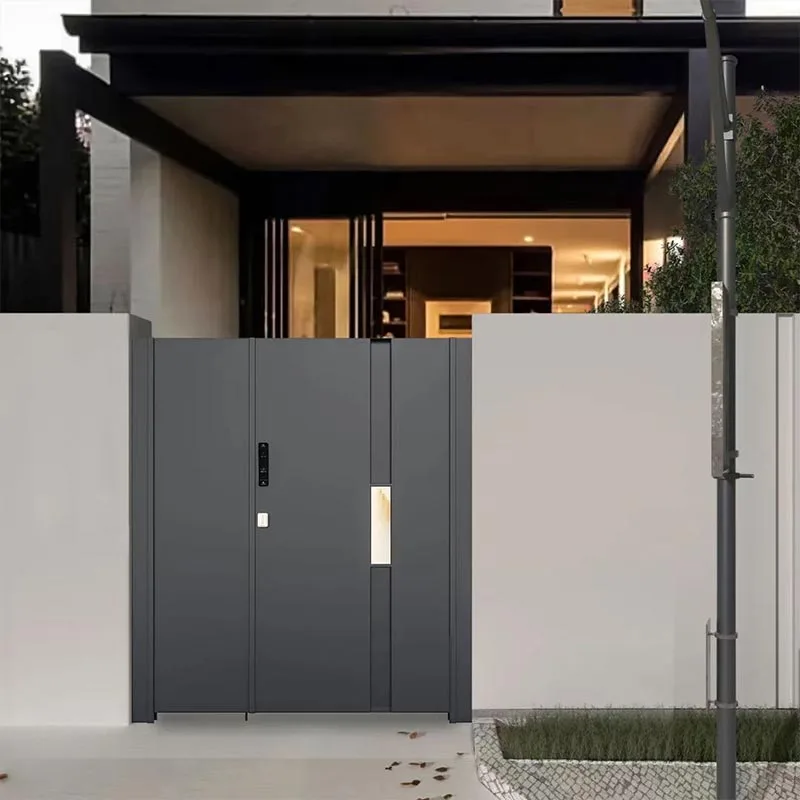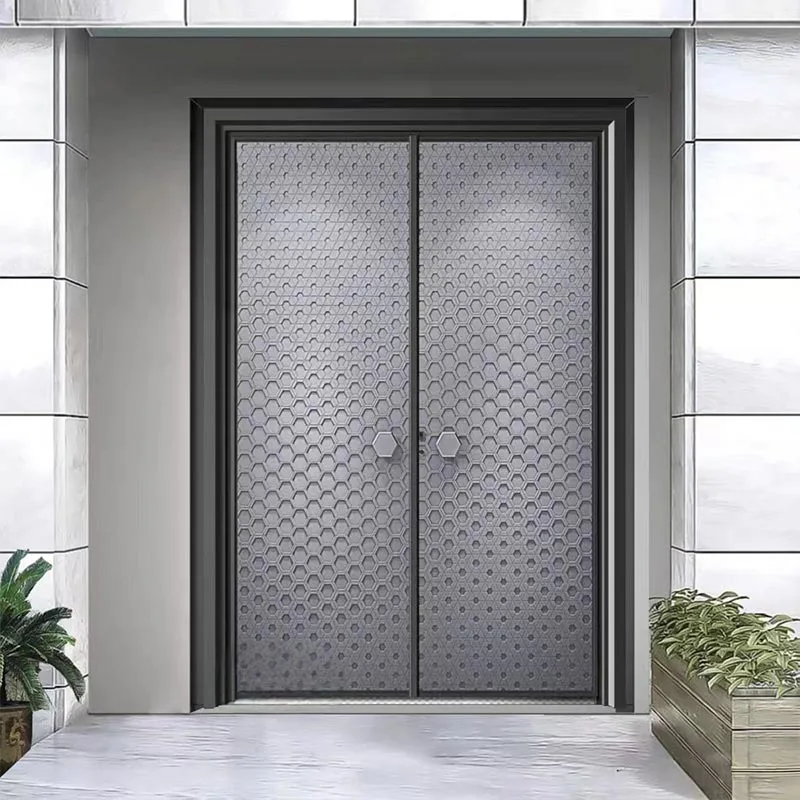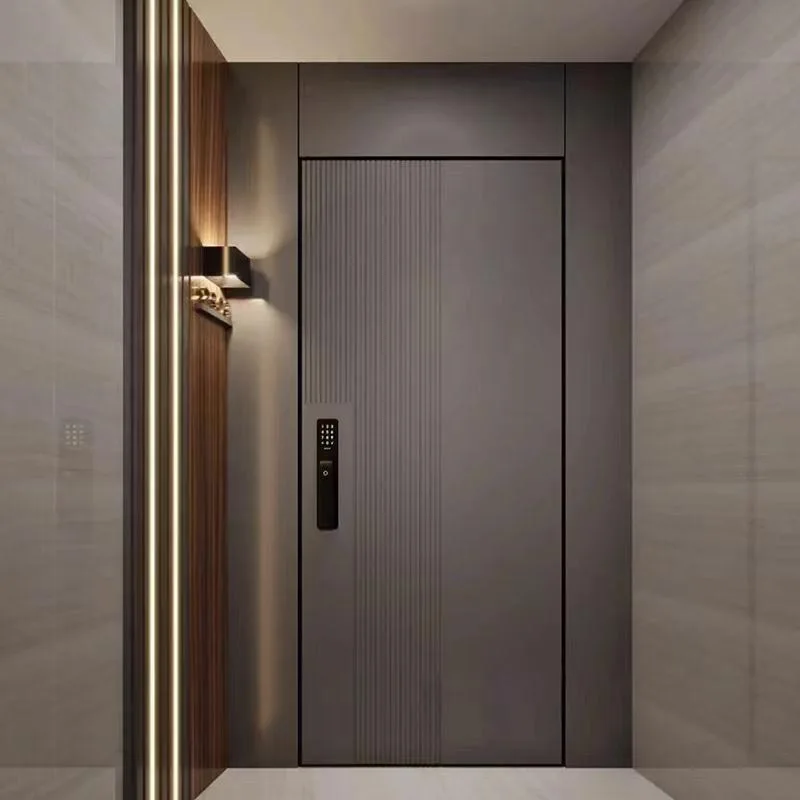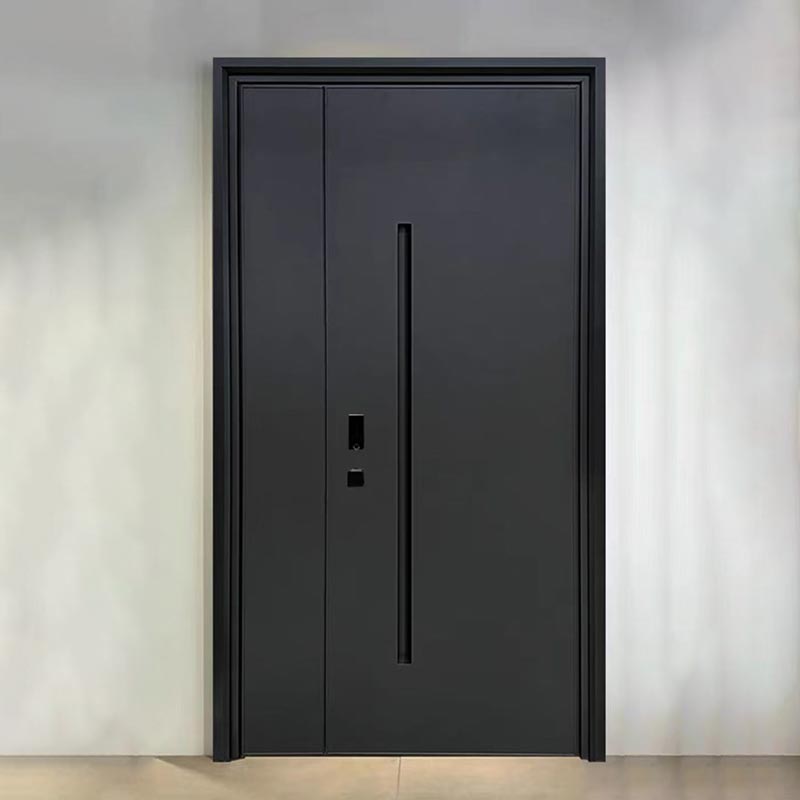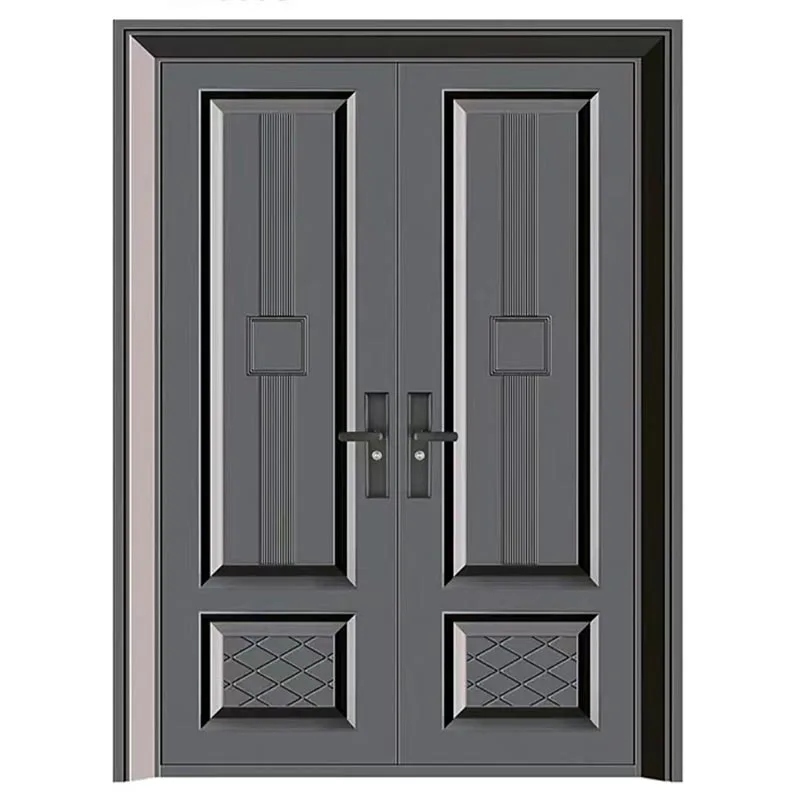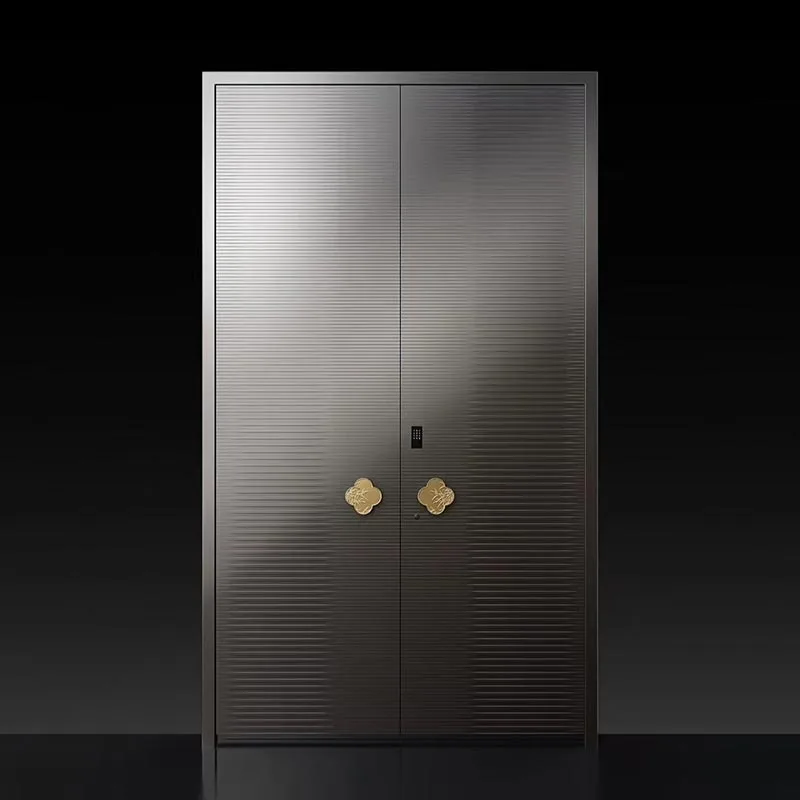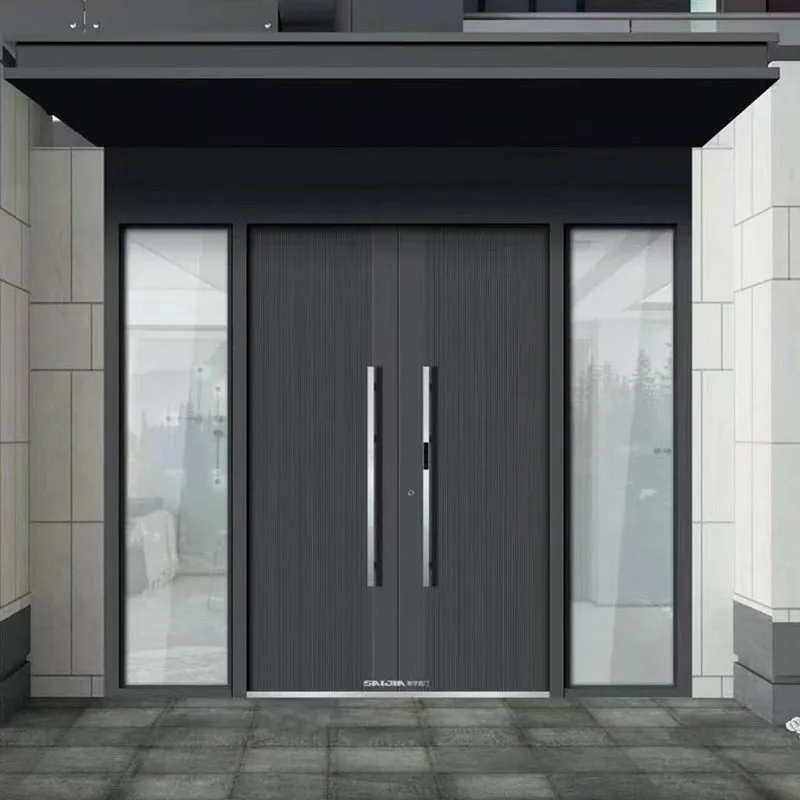

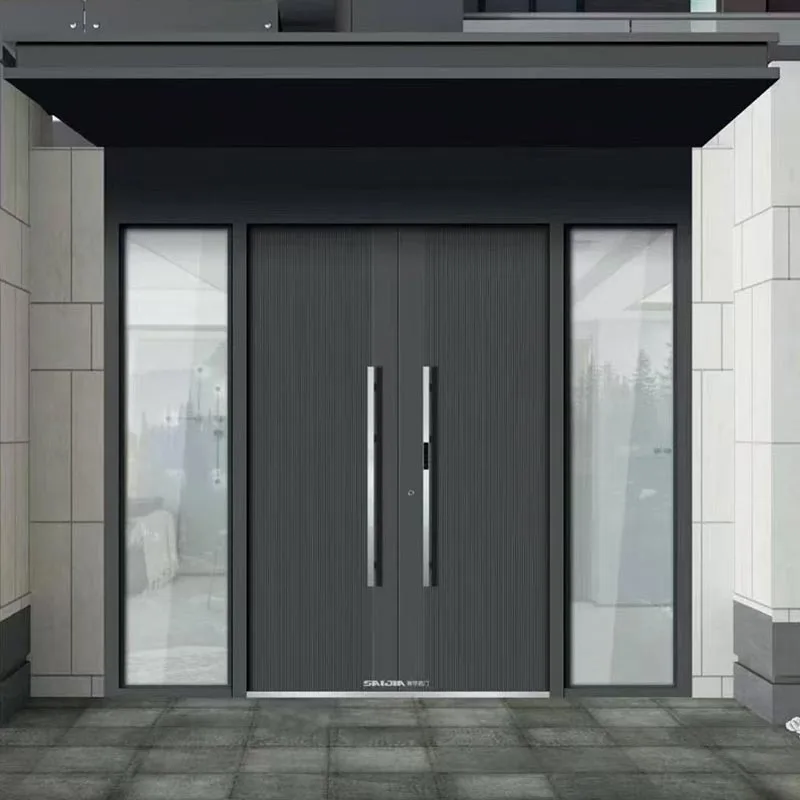
Usually yes, but the lock must be treated as part of the door design. The lock case, door thickness, backset, reinforcement, wiring, strike and inside escape function all need to agree before metal is cut.
A smart lock does not become compatible because its trim fits on the face of the door. Compatibility depends on the complete assembly behind that trim, including the mechanical lock case, moving bolts, reinforcement, cable route and frame strike.
A smart lock can be installed on many custom aluminum, copper-aluminum, copper and steel entrance doors. The safest route is to select the exact lock model before the shop drawing is approved. Give the door factory the current installation drawing, lock case, outside and inside trim, power requirements and required door function. A finished door may be retrofitted, but only after the internal structure, available edge depth, existing cutouts and any fire rating have been checked.
A smart lock is a four-part door system
Buyers often focus on fingerprint readers, keypads and mobile apps. Those are the visible controls. The harder compatibility questions sit inside the door edge and frame. A useful review follows the load path from the user interface to the strike.
If any one part is unresolved, the lock may power on yet fail as a door system. A misaligned strike can prevent the motor from extending the bolt. A decorative panel can leave too little flat area for the trim. A door may accept a mortise pocket but lack a protected cable path. These are drawing issues, not problems an installer should discover on site.
First identify the lock architecture
“Smart lock” describes an electronic feature, not a single mechanical format. The factory needs to know what the electronic unit is operating. Do not approve a cutout until the supplier has identified the lock architecture and supplied the corresponding template.
| Lock approach | Typical door preparation | Main compatibility check | Common mistake |
|---|---|---|---|
| Smart deadbolt or bored lock | Round face holes plus an edge bore for the latch or bolt. | Door thickness range, bore pattern, backset, flat trim area and clearance from the frame. | Assuming a wood-door template can be drilled through a reinforced or layered metal leaf without review. |
| Mortise smart lock | A rectangular pocket in the door edge, faceplate recess and trim penetrations. | Lock-case depth and height, backset, spindle and cylinder centers, handing, faceplate and reinforcement. | Using a similar-looking lock case as a substitute. Small dimensional changes can move every hole. |
| Smart trim on a mechanical case | Existing mortise or cylindrical case remains; electronic trim operates the spindle or cylinder. | Mechanical case function, spindle format, cylinder, fixing points and inside escape operation. | Checking only the exterior trim and ignoring the existing lock function. |
| Smart multipoint system | Central gearbox plus rods, hooks or bolts along the door edge. | Gearbox position, operating travel, rod length, keeps in the frame and manual override. | Replacing only the center lock while assuming the existing multipoint linkage will move correctly. |
| Access-control electric lock | May use an electrified mortise lock, electric strike, magnetic lock or another listed arrangement. | Power supply, cable transfer, controller, fail-safe or fail-secure behavior, egress and local code. | Treating a building access-control opening like a battery smart lock for a private residence. |
ANSI/BHMA A156.13 covers performance and dimensional criteria for mortise locks and latches.1 That does not mean every mortise lock shares one universal cutout. The standard establishes product requirements; the exact model template still controls the door preparation.
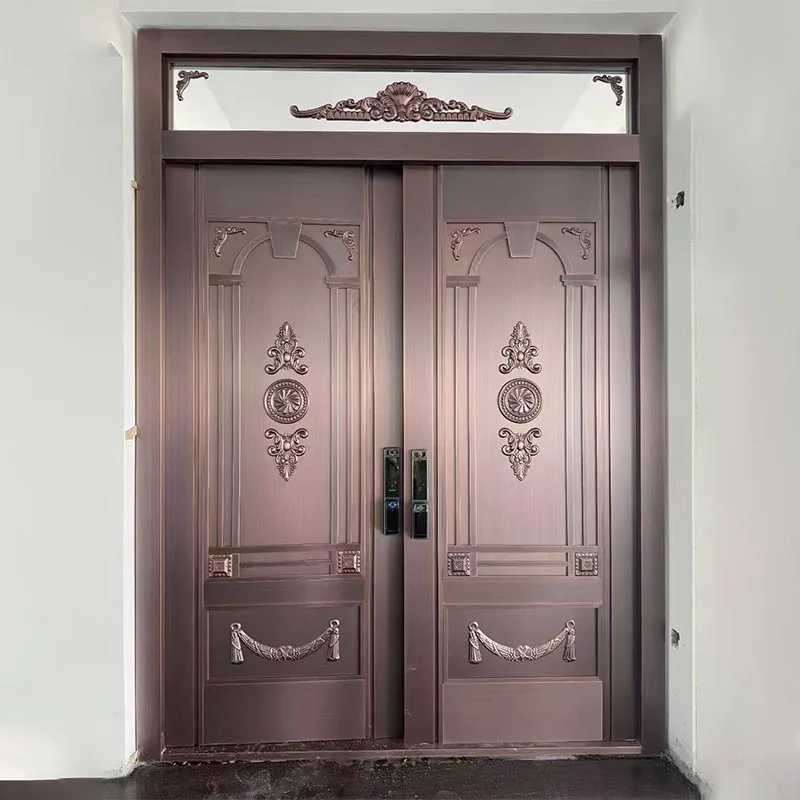
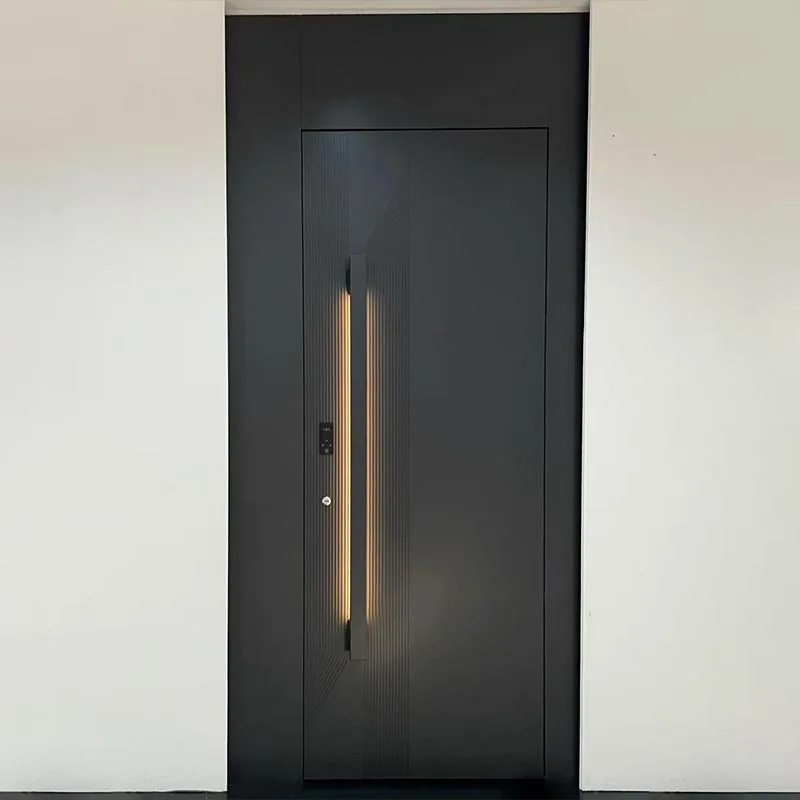
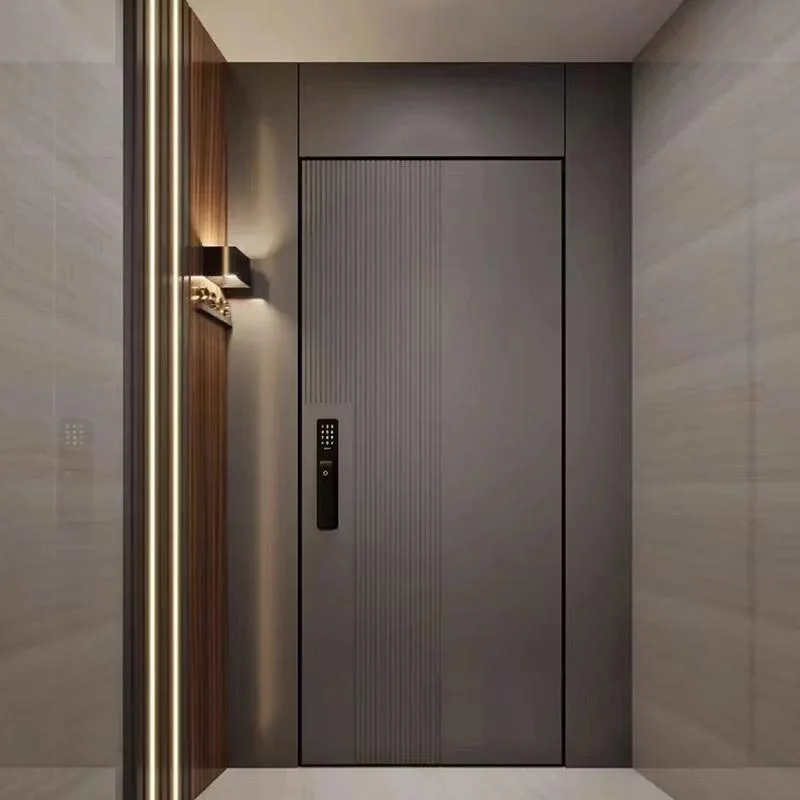
The dimensions that must appear on the approved drawing
A lock model number is the start of the review, not the end. Product revisions, regional versions and left or right variants can use different cases or wiring. Attach the dated manufacturer drawing to the door submittal and show the resulting preparation on the door shop drawing.
- Finished door thickness, including applied panels or cladding at the lock.
- Backset, measured from the finished door edge to the spindle or stated lock center.
- Lock-case envelope, including depth, height and every projection.
- Faceplate size, corner shape, fixing holes and required edge recess.
- Spindle, cylinder and handle centers, with their vertical spacing.
- Through-bolt and cable holes, including no-drill zones.
- Handing and swing, viewed using the lock supplier's stated convention.
- Finished-floor height to the handle or reader center where required.
- Strike and bolt geometry, including projection, pockets and adjustment range.
- Clear trim area on both faces, measured against carvings, glass and pulls.
- Power details, including battery access or cable entry and voltage if wired.
- Inside operation, emergency release and mechanical override specified by the lock maker.
The standard and custom entrance door size guide explains why the structural opening, finished opening, frame size and leaf size are different dimensions. The same discipline applies to locks. Every dimension needs a named reference point.
Multipoint, double and pivot doors need an extra review
Multipoint locking systems
A multipoint door may have a center gearbox connected to upper and lower bolts, hooks or rods. The smart unit must deliver the motion and torque that this linkage requires. Confirm whether the handle must be lifted before electronic locking, whether the motor drives every point, and what happens if one keep is misaligned. “Compatible with multipoint locks” is too broad without the gearbox and linkage model.
Double and mother-son doors
The active leaf usually carries the operating lock, while the inactive leaf carries flush bolts or another retaining system. The center strike may therefore be fixed to a moving leaf rather than a masonry-anchored jamb. Show the meeting stile, astragal, seals, inactive-leaf bolts and opening sequence on the drawing. Our single versus double entrance door guide covers how the leaf split affects clear opening and daily use.
Pivot and oversized doors
A pivot axis changes the geometry at both door edges. A deep lock case or long bolt may conflict with the narrow latch-side structure, and pull handles can compete with the reader for the same flat area. Oversized leaves also place more demand on alignment. A smart lock cannot compensate for a door that drops, twists or closes against a poorly positioned strike.
Plan power and wiring before the leaf is closed
Battery locks avoid a continuous cable across the hinge side, but the battery compartment must remain accessible after the inner panel and pull handle are installed. Record the specified battery type, low-battery behavior, emergency power method and mechanical override from the selected lock manual. Do not assume these features from the word “smart.”
A wired lock or reader needs a defined route from the lock pocket through the leaf and across the moving joint to the frame. The drawing should identify:
- the cable type and conductor count required by the lock or access-control designer;
- a protected internal raceway that avoids moving rods, sharp edges and fasteners;
- the hinge-side transfer method, such as a listed power-transfer hinge, concealed transfer or protected loop;
- service access and pull points if a cable needs replacement;
- the controller and power-supply location, including backup behavior;
- separation from other circuits where the product instructions or local rules require it.
Photograph the cable route and label both ends before the decorative skins are closed. That simple handover record prevents future drilling into a hidden wire or reinforcement.
Exterior trim needs its own exposure check
An entrance door separates two environments. The outside reader may face rain, condensation, solar heat and salt deposit while the inside module remains protected. Check the manufacturer's permitted installation orientation and environmental rating for each side of the assembly. A rating printed for one component should not be applied to the whole lock without evidence.
The lock preparation must also preserve the door's water path. Review gaskets behind trim, cable penetrations, exposed fasteners, faceplate edges and the strike pocket. Sealant should follow the hardware instructions and should not trap water inside a recess or block intended drainage. For exposed sites, use the coastal and humid climate door guide to review metals, coatings and dissimilar-metal contact around the hardware.
Connected locks add a digital maintenance layer. CISA recommends changing factory-set credentials, securing the home network, enabling multifactor authentication when available and keeping connected devices updated.2 Before purchase, ask who owns the administrator account, how users are removed, how long updates are offered and whether core door operation remains available during a network outage.
Do not separate smart access from safe egress
For a private residential entrance, the required function may be straightforward. A shared lobby, workplace, hotel or other occupied building can have stricter rules for releasing the door from the egress side, accessibility, fire alarm interfaces and power loss. The applicable rule depends on the country, occupancy and adopted code.
The 2024 International Building Code states that access-controlled locking on the egress side must comply with specified locking arrangements or be readily openable from the egress side without a key, special knowledge or effort.3 It also sets detailed conditions for several types of electrically locked egress doors. This is a design-team and authority review, not a feature to resolve after the door arrives.
Fire-rated openings require separate caution. Changing hardware or machining a listed door can affect the certified assembly. UL explains that modifications and hardware changes may require a field evaluation to determine continued compliance.4 If a fire rating is required, confirm the door, frame, lock, closer, seals, installation and permitted preparation as one assembly before ordering. Do not drill a labeled door based only on a generic lock template.
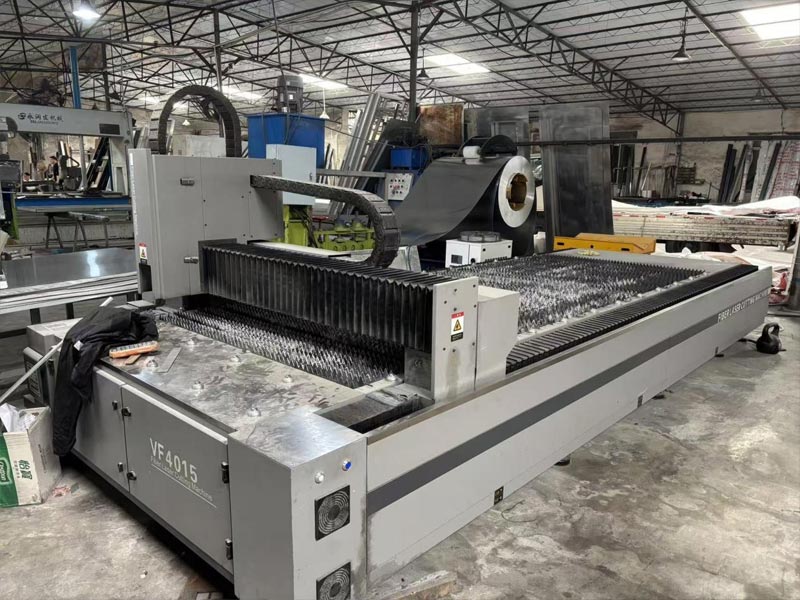
A public-page audit, not a blanket compatibility claim
Hongfeng's current homepage says its product lines support smart integration. The copper-aluminum category lists optional fingerprint, password and key functions. The Security Villa Entry Door page also mentions fingerprint, password, card and remote unlocking, while the High-End Entry Copper Door page lists optional intelligent locks and facial recognition.
Those pages do not publish compatible lock brands or models, lock-case dimensions, wiring diagrams, environmental ratings, battery life, communication protocols or certification identifiers. Therefore, compatibility still has to be confirmed for each project from the selected lock drawing and the approved door shop drawing.
What to send in a smart-lock door RFQ
A useful RFQ lets the door factory, lock supplier and project designer review the same information. Send these items together rather than distributing separate screenshots across messages:
- door elevation, section and structural opening dimensions;
- single, double, mother-son or pivot configuration, plus handing and swing;
- exact smart-lock manufacturer, model, regional version and revision;
- dimensioned lock-case, trim and strike installation drawings;
- physical sample or confirmed sample availability before production;
- required access methods, such as key, PIN, card, fingerprint or remote release;
- battery or wired power arrangement and cable-transfer requirement;
- multipoint gearbox and rod information, if used;
- outside exposure, overhang and any coastal or high-humidity condition;
- occupancy, egress function and required local approvals;
- fire-rating requirement, including the listed opening design if applicable;
- finish, pull handle, decorative panel and glazing locations near the lock.
Use a six-gate approval workflow
Preassembly should use the production lock, not a case described as “equivalent.” Test the door in its intended orientation and record the result. If the lock needs the door to be firmly pulled against seals before the motor can throw the bolt, that operating condition should be understood before installation.
Best case for factory preparation
The lock is selected before fabrication, its template is dimensioned, the physical case is available for trial fitting, and all parties approve the coordinated drawing.
Stop and review
The door is finished, the lock model may change, the existing linkage is unknown, wiring was not planned, or a fire label and egress function could be affected.
Plan the handover, not just the installation
A functional handover package should include the lock model and serial record, mechanical keys, administrator transfer procedure, user enrollment steps, wiring diagram, power-supply information, battery specification, reset instructions and supplier contacts. For a project with staff changes, define who can remove users and recover the account.
Maintenance starts with alignment. If the door rubs, drops or needs force to latch, correct the door and strike before blaming the electronics. Keep the faceplate and bolt path clean, follow the lock maker's battery and cleaning instructions, and do not apply an unspecified lubricant into an electronic lock. Retain an unmarked copy of the approved machining drawing for future replacement.
Frequently asked questions
Can a smart lock be added after a metal door is finished?
Sometimes. First inspect the internal reinforcement, door thickness, existing holes, lock-edge depth, panel profile, strike and any hidden multipoint linkage. Retrofitting may expose bare metal or require finish repair. If the door or frame is part of a rated assembly, obtain approval for the proposed modification before machining.
Will a smart lock fit a thick custom entrance door?
Only if the selected model supports the finished thickness and its spindle, cylinder, screws and cable can span the complete assembly. Applied cladding and decorative panels count toward local thickness. Ask the lock supplier for the permitted range and any extension kit for that exact model.
Can a smart lock operate a multipoint locking system?
Some can, but compatibility must be confirmed with the exact gearbox and linkage. Check operating travel, torque, handle-lift requirements, upper and lower rods, manual override and frame keeps. A compatible-looking center case does not prove that the full multipoint system will operate.
Does drilling for a smart lock weaken a metal door?
Poorly planned drilling can cut reinforcement, expose metal, damage a decorative skin or leave an oversized pocket. Factory preparation allows the opening to be reinforced and finished around the intended lock. Any field work should follow an approved drawing and protect the cut edges.
Can smart locks be used on double or pivot entrance doors?
Yes, when the meeting stile or pivot geometry is designed around the lock. A double door needs a stable strike condition and a defined inactive-leaf sequence. A pivot door needs enough latch-side depth and clearance. Both require the exact door and lock sections to be reviewed together.
What should I send the door factory before production?
Send the exact lock model and revision, dimensioned installation drawing, door elevation, finished thickness, handing, swing, power plan, strike detail, required access methods, exterior exposure, egress function and any fire-rating requirement. A physical lock sample is valuable for trial fitting when available.
Get the lock and door reviewed on one drawing
Send the opening dimensions, entrance elevation, exact smart-lock model and installation drawing before the leaf construction is finalized. Hongfeng can review the lock pocket, trim clearance, reinforcement, strike and cable route as part of the custom-door discussion.
Send project details