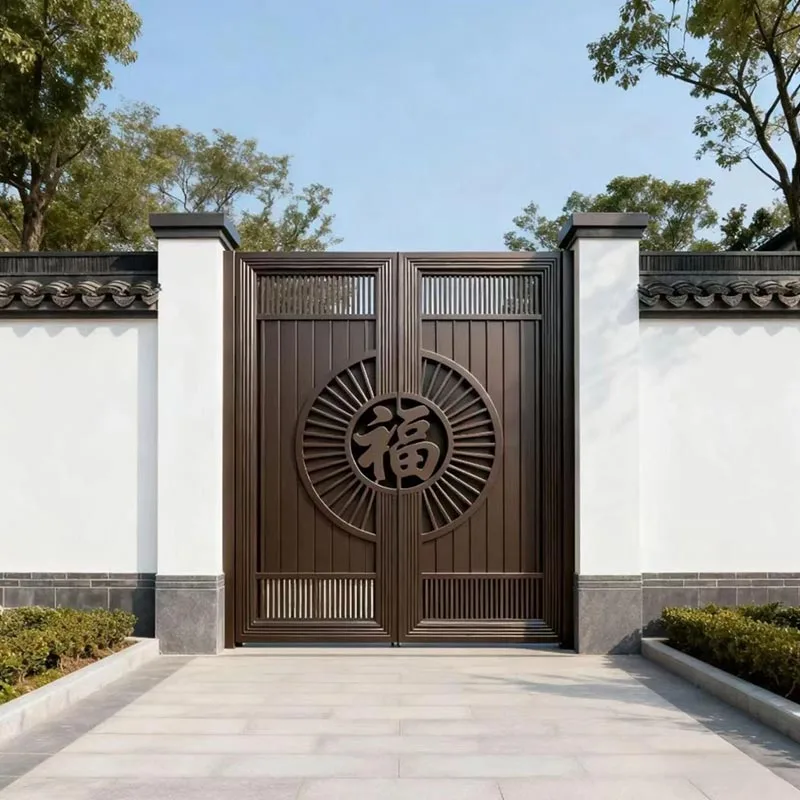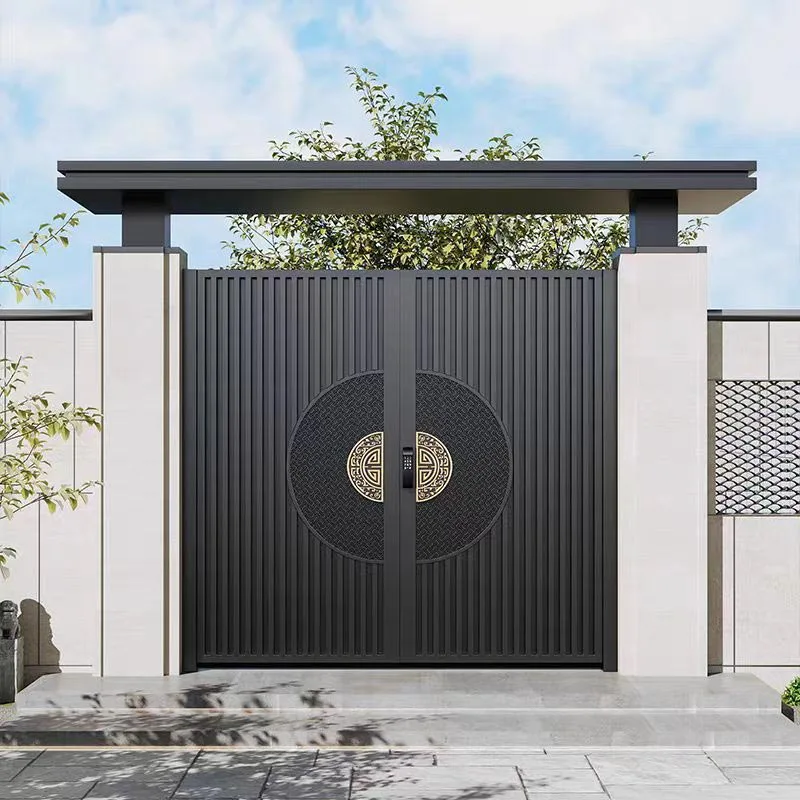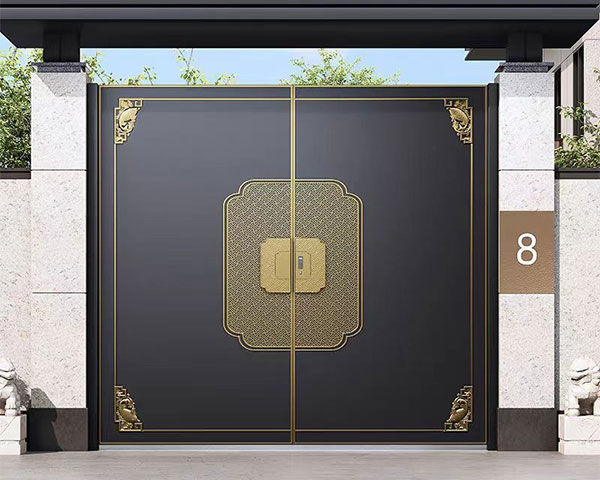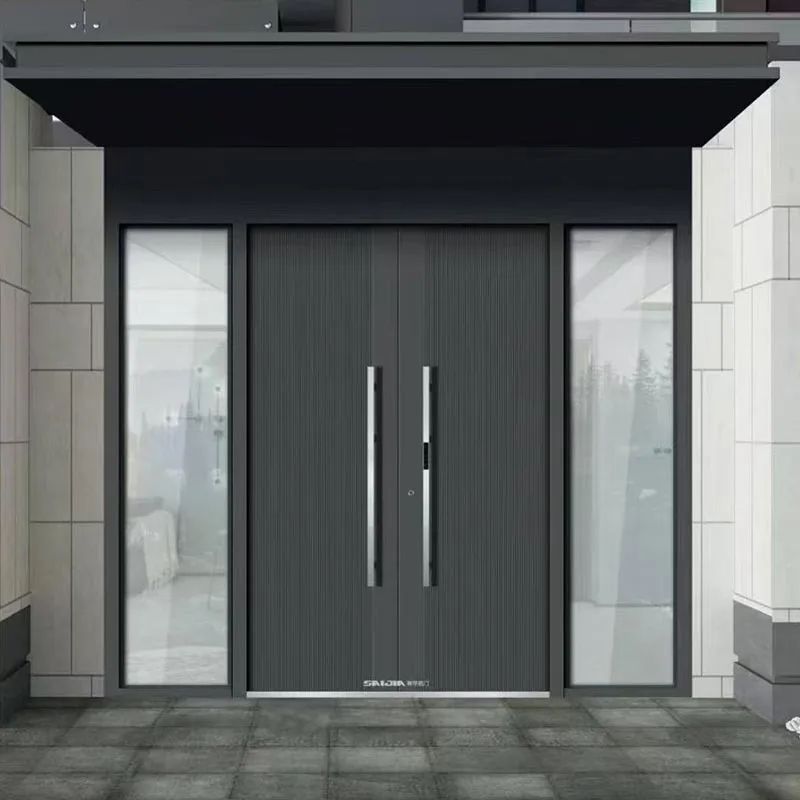

Quick Answer
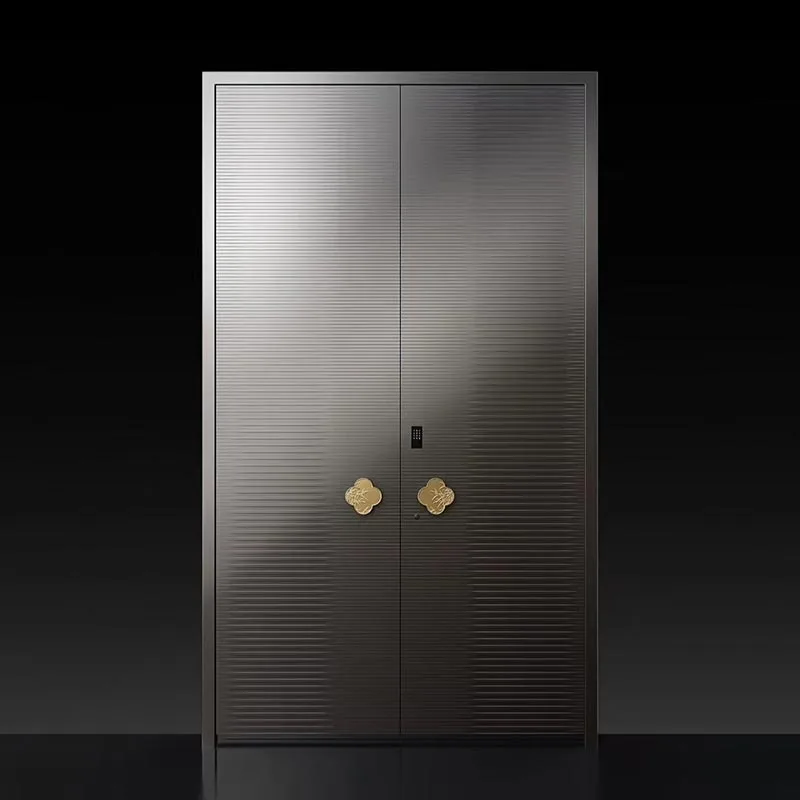
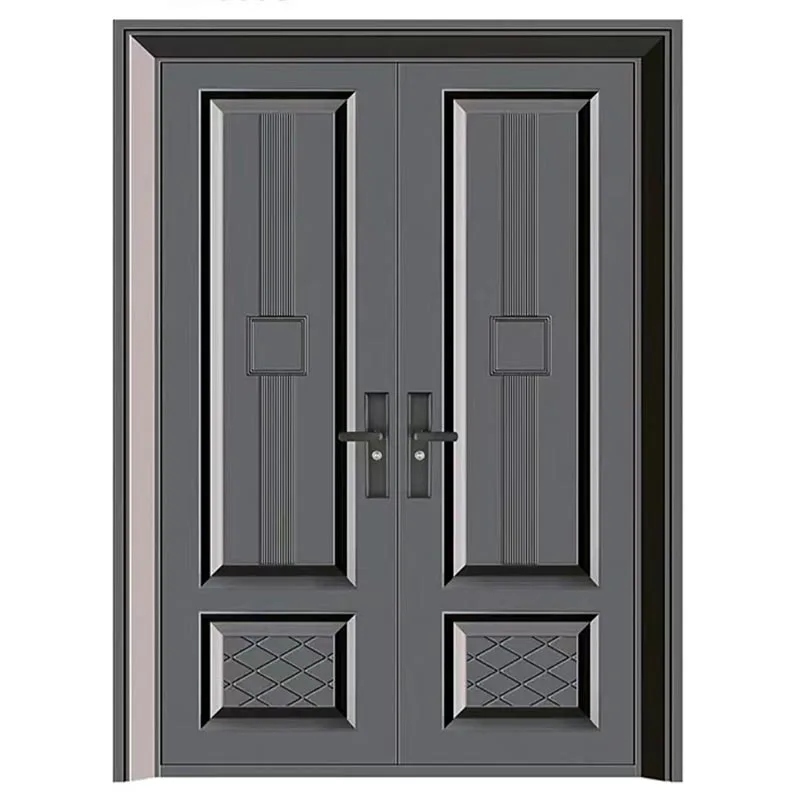
Choose a villa entrance door in this order: material, door type, size, performance, finish, then supplier. For material, cast aluminum is the durable, rust-free all-rounder, copper-aluminum adds a premium look at a sensible cost, and solid copper is the top-tier statement. Settle material and size first — the look follows once the door is right for the opening.
We have cast and finished doors at Hongfeng since 2007, and the questions that reach our workshop rarely change. Buyers know the door matters; what they lack is the order to decide in. This guide is the exact sequence we walk clients through — with a few notes from the factory floor along the way.
Why a Villa Entrance Door Is a Different Decision
On an apartment, the front door sits behind a corridor. On a villa it is a façade element, read from the gate and the street before anything else about the house.
That means one door has to do three jobs at once: look right at a distance, survive years of sun and rain, and lock like a real security barrier. Cheaper doors drop one to serve another. Choosing well is about refusing that trade-off.
1 Start With the Material
Material is the decision everything else hangs on. It sets how the door ages, how it locks, how it can be shaped, and much of the cost.
If you have researched front doors, you have mostly seen steel, wood and fiberglass compared — those dominate the mainstream market. For a villa where appearance and longevity lead, three premium materials do the work instead: they are decorative, they don't rust or rot, and they are built to be seen.
| Material | Best for | Strengths | Trade-off |
|---|---|---|---|
| Cast aluminum | Durable, decorative entrances at a sensible cost | Won't rust; deep carved detail; lighter leaf | Less prestige than copper |
| Copper-aluminum | A copper look without full copper cost/weight | Premium surface; strong structure; good value | Facing, not solid copper throughout |
| Solid copper | Top-tier statement entrances | Timeless; patinas beautifully; prestige | Heaviest; highest cost |
A cast aluminum door leaves us as a single casting, not welded sheet. There are no seams for water to creep into and split open in year five — which is the whole reason we cast the leaf in one piece. It is the difference you don't see on day one but do see in a decade.
For most villa buyers, cast aluminum is the practical starting point. If you are weighing it against a cheaper alloy, see our cast aluminum vs zinc alloy comparison; for the copper option, read the advantages of copper-aluminum doors.
2 Match the Door Type to Your Opening
With material set, the shape of your opening decides the door type. A grand entrance, a garden wall and a standard porch each call for something different.
| Door type | What it is | Suits |
|---|---|---|
| Pivot door | Turns on a floor-and-head spindle; carries a large leaf | Tall, wide, statement entrances |
| Double / mother-son | Two leaves, equal or one active leaf | Most villa main entrances |
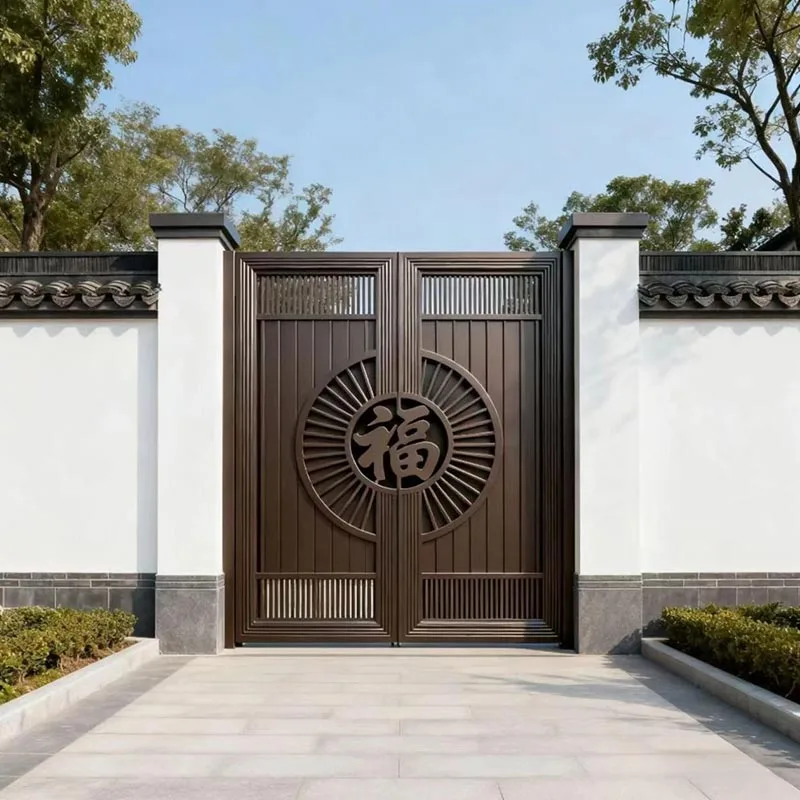
| Courtyard gate | Wider span in a boundary wall | Garden and perimeter entrances |
| Anti-theft door | Reinforced leaf, multi-point locking | Security-led entrances |
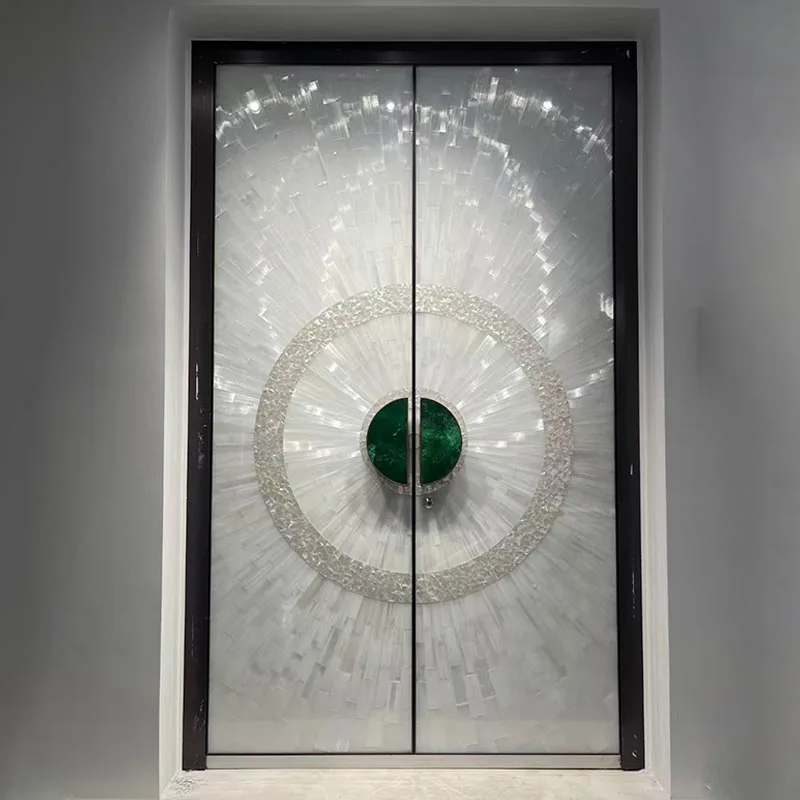
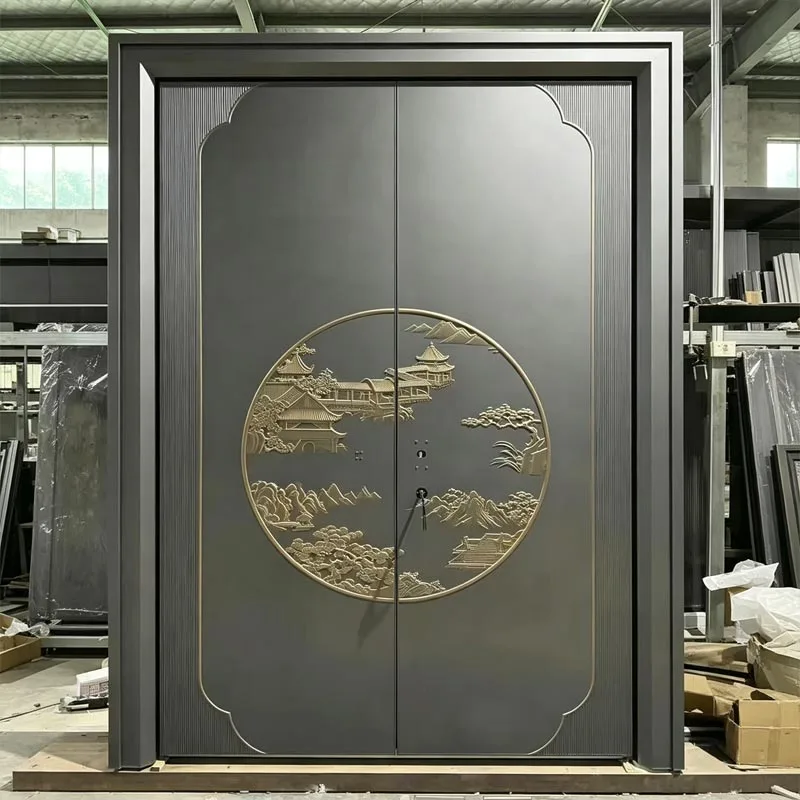
| Carved door | Deep engraved decorative panels | Ornate, classical façades |
Each type has its own deeper guide: how a pivot door carries an oversized leaf, how to size a courtyard gate, and what makes a genuine anti-theft door.
3 Get the Size and Proportion Right
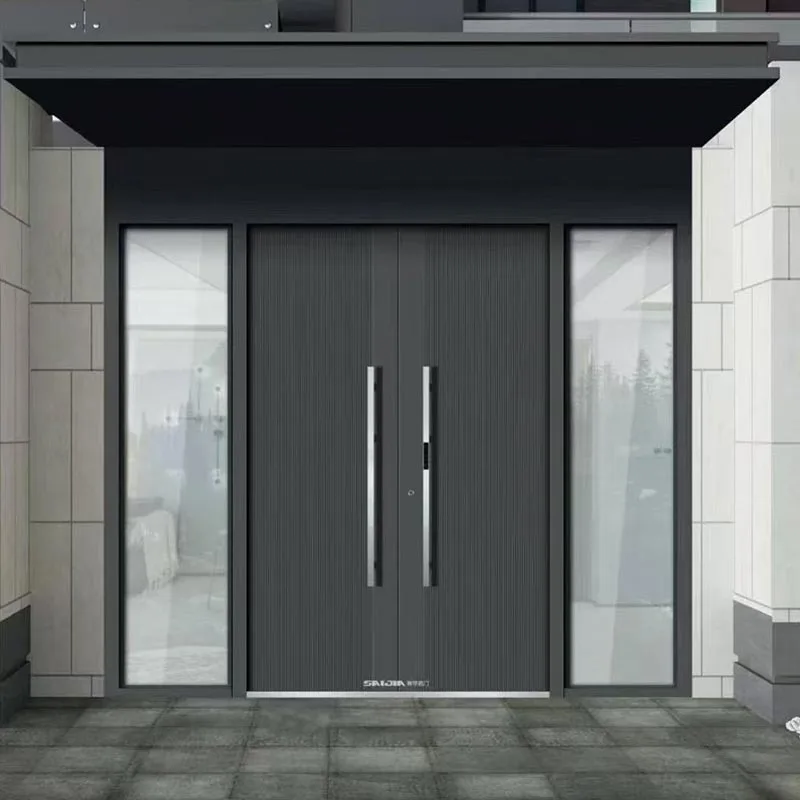
A door that is technically fine can still look wrong if it is out of scale with the house. A villa's main entrance usually needs a wide single leaf, a double, or a pivot panel to hold its own against a tall façade.
Too small and the entrance looks apologetic; too large and it overpowers the elevation. The fix is to design the door to the opening, not to a stock size.
After years of this, the doors that come back to us for adjustment share one thing: a site measurement that was rushed. We measure on site first for exactly that reason — the proportions of a custom door should answer to your building, not to a catalogue.
4 Look Past the Surface to Performance
A villa entrance is an exterior boundary, so it has to earn its keep on more than looks. Four things separate a serious door from a decorative one — none of them visible in a catalogue photo.
| Feature | What it does | Why it matters |
|---|---|---|
| Thermal break | Insulating barrier between inner and outer metal | Reduces heat transfer and condensation |
| Multi-layer sealing | Gaskets around the leaf | Keeps out draughts, driven rain and noise |
| Multi-point locking | Bolts at several points, not one latch | Spreads the force in a forced entry |
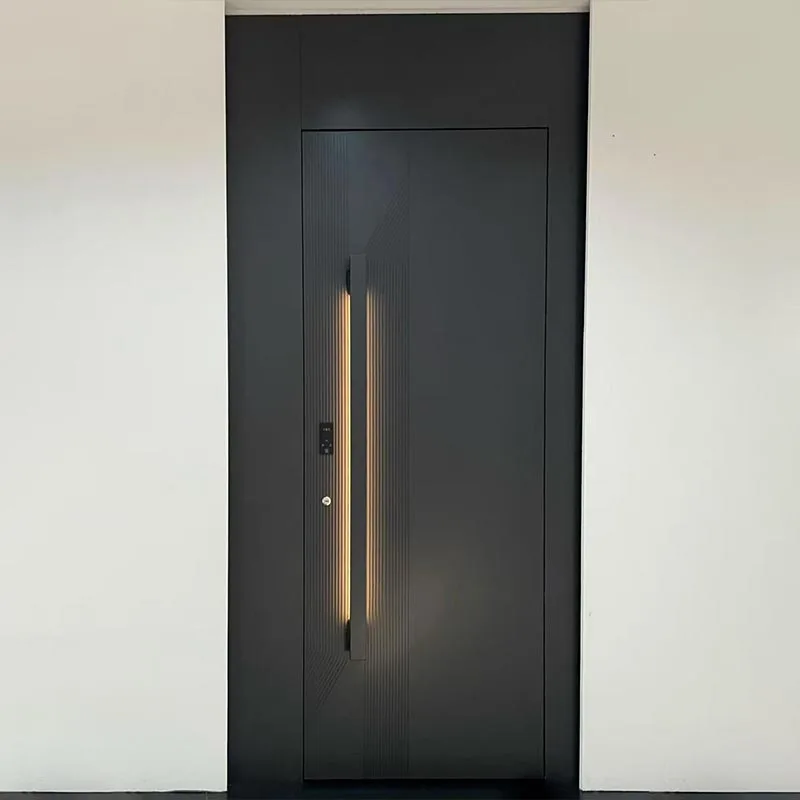
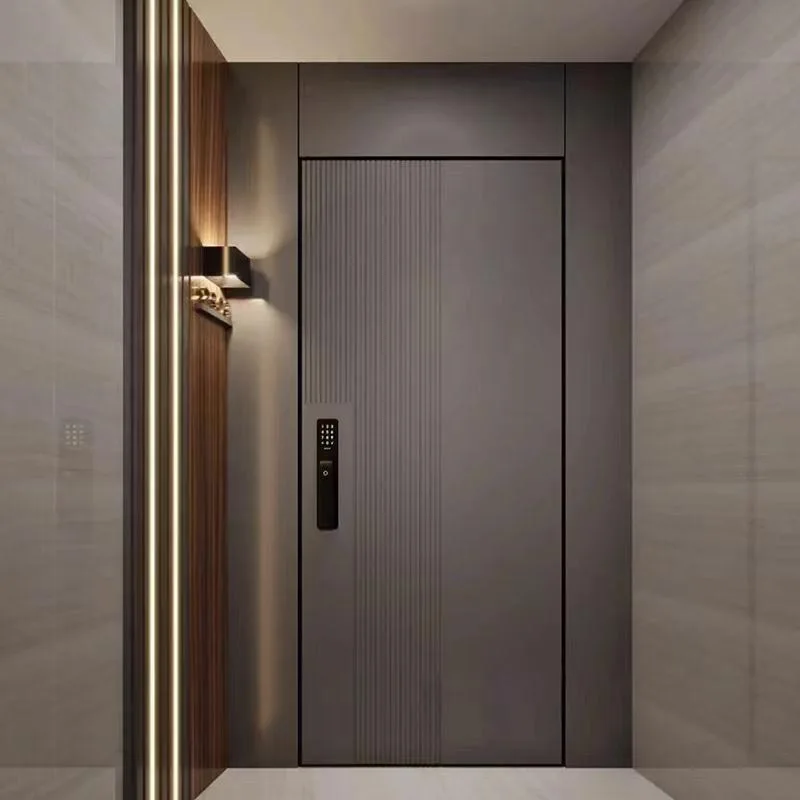
| Smart integration | Fingerprint / smart-lock designed in | Clean hardware, not a retrofit |
One honest caution: be wary of any supplier quoting exact insulation or decibel figures without saying how they were tested. Real performance depends on the specific build and installation, so ask for the test basis rather than taking a number on trust.
5 Decide on Design, Finish and Customization
This is where a custom door earns its name. The panel style — clean and minimal, or deeply carved — should follow the architecture, not a trend. A modern villa wants restraint; a classical elevation can carry ornament.
Finish is the other half: color, texture and how the surface ages. Copper is chosen partly because it changes; a coated aluminum finish is chosen partly because it doesn't. Neither is better — they are different intentions.
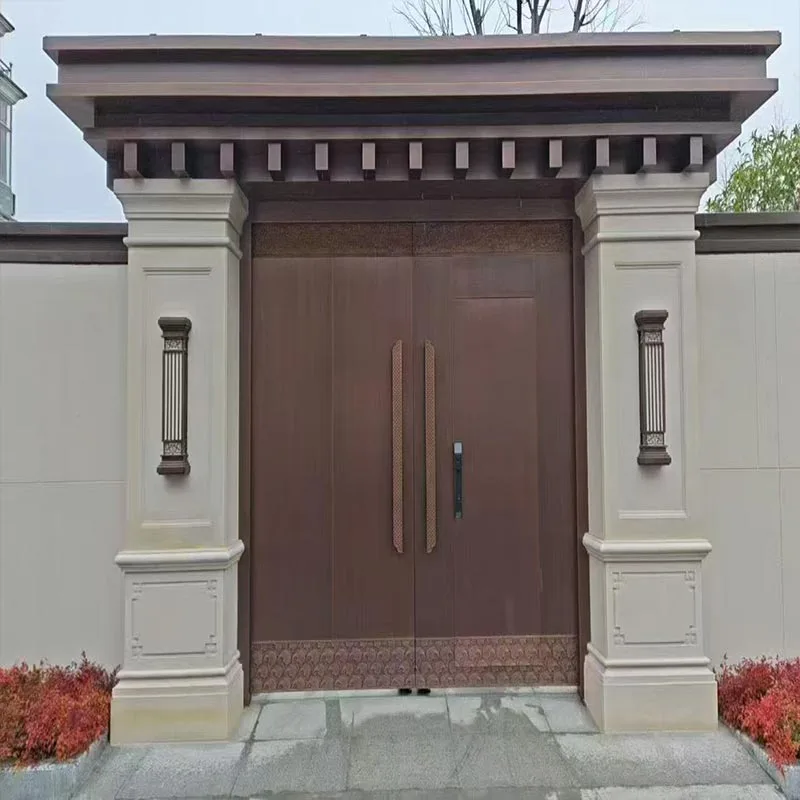
The carved patterns are cut by precision engraving into the casting, not pressed into thin sheet. Up close, that depth is the line between a genuine luxury door and an imitation of one — and it is the first thing a discerning buyer notices at the threshold.
6 Choose a Manufacturer, Not Just a Door
A custom door is only as good as the process behind it. A photo tells you nothing about whether the measurement was accurate, the casting sound, or whether anyone answers after installation.
| Ask a supplier | What a good answer looks like |
|---|---|
| Who measures the opening? | The maker measures on site before production |
| Is the door cast in one piece? | Integral casting, no corrosion-prone seams |
| Who installs and handles after-sales? | One team, not a chain of subcontractors |
| What quality standard do you work to? | A recognised system such as ISO 9001 |
We keep casting, precision engraving, finishing and installation under one roof. When a door needs adjusting after it's hung, there is no subcontractor to chase — it's our own team. It's also why we run a 24-hour after-sales line rather than a ticket queue.
Hongfeng is ISO 9001 certified and recognised as a National High-Tech Enterprise, and our doors ship to projects across Europe, Southeast Asia and the Middle East. When you evaluate any supplier, ask who owns each step — and what happens after the door is installed. More about our workshop and process.
Which Door Suits Which Entrance?
| Your entrance | Start here | Why |
|---|---|---|
| Tall, wide main entrance | Pivot door | Carries a large leaf; architectural presence |
| Standard villa front, daily use | Mother-son / double | Everyday convenience plus a grand opening |
| Garden wall or perimeter | Courtyard gate | Wider span; weathers both sides |
| Security is the priority | Anti-theft door | Reinforced leaf; decorative face |
| Top-tier statement | Solid copper door | Prestige material; patinas over time |
Not sure which door your project needs?
Send us your opening dimensions and a photo of the façade. We'll recommend a material and door type and prepare a tailored design and quote — measurement to after-sales handled as one process.
Request a Tailored Quote or contact us directly →Frequently Asked Questions
What is the best material for a villa entrance door?
There is no single best material — it depends on your priorities. In the mainstream market, steel, wood and fiberglass are the usual choices. For a villa, cast aluminum is the durable, rust-free all-rounder that also takes carved detail, copper-aluminum gives a premium copper look with an aluminum structure, and solid copper is the top-tier choice where prestige matters most.
What is the most secure material for a front door?
Steel is often named the most secure material, and a well-built steel door is strong. But security depends more on construction and locking than on the raw material: a reinforced leaf with multi-point locking and anti-lift hinges is what actually stops a forced entry. A cast aluminum door built to a security specification delivers that while also resisting the rust that affects steel outdoors.
Do cast aluminum doors rust?
No. Unlike steel, aluminum does not rust, which is a main reason it is used for exterior villa doors, including in humid and coastal climates. It resists corrosion while staying light enough to reduce long-term strain on the hinges and frame.
Are aluminum doors a good choice for a front door?
Yes. Cast aluminum doors are corrosion-resistant, low-maintenance and can be cast as a solid, reinforced leaf, so they suit exterior entrances well. They also hold deep carved detail for a decorative look. For security, pair the door with multi-point locking and anti-lift or concealed hinges.
What is the difference between a cast aluminum and a copper door?
A cast aluminum door is lighter, rust-free and more accessible in cost, and it takes carved detail well. A solid copper door is heavier, sits at the top of the range, and develops a natural patina over time as a prestige material. A copper-aluminum door bridges the two, using a copper facing over an aluminum structure to get the copper look without the full weight and cost of solid copper.
How much does a custom entrance door cost?
It depends on several factors: the material (solid copper sits highest, cast aluminum is more accessible), the size, whether it is a pivot or double leaf, the depth of carved detail, the locking and smart hardware, and the level of customization. Because every villa door is made to the opening, the reliable way to get a real figure is to send the dimensions and specification for a quote.
Zhejiang Ninghai Hongfeng Copper - Aluminum Door Co., Ltd. — cast aluminum, copper-aluminum, pivot and copper doors, custom-made since 2007. Baiqiao Industrial Zone, Ninghai County, Ningbo, China.