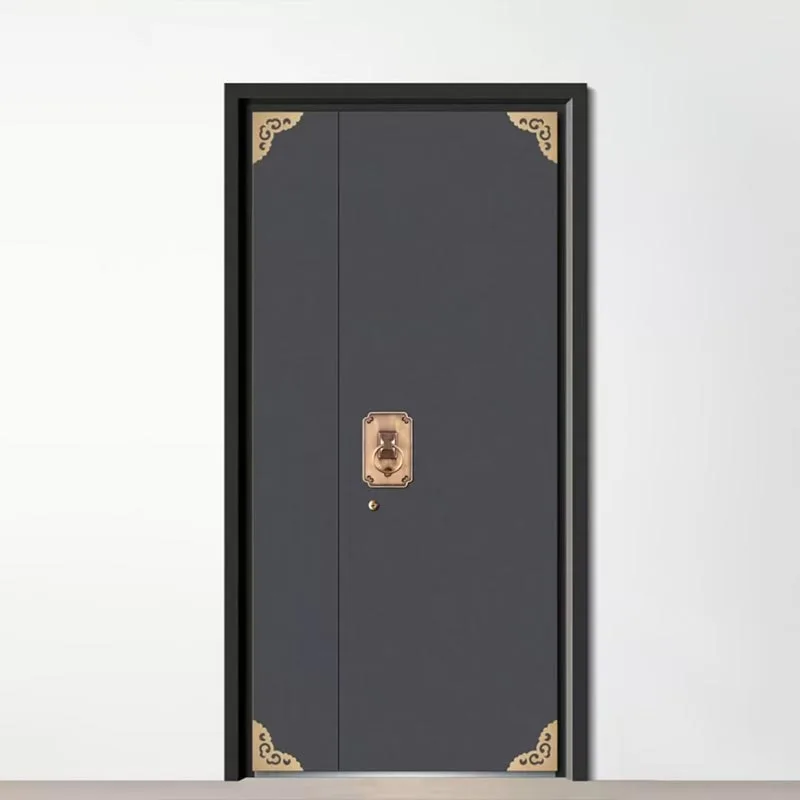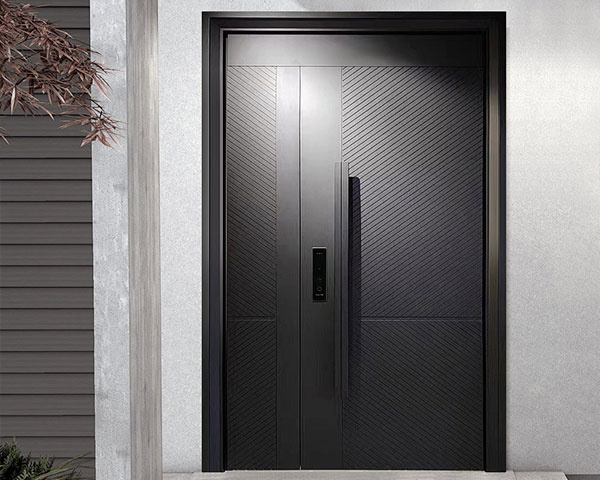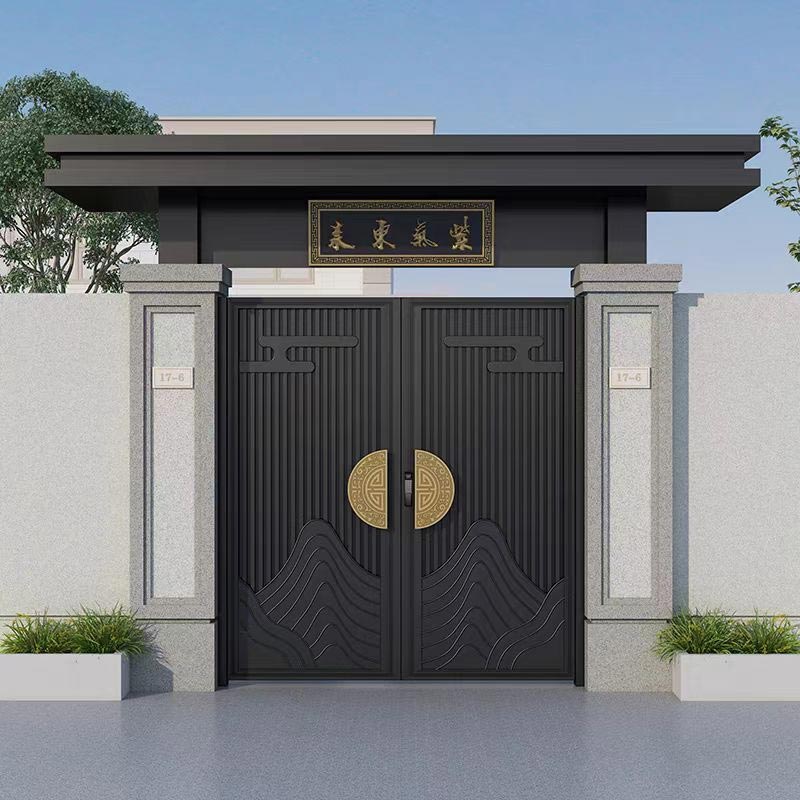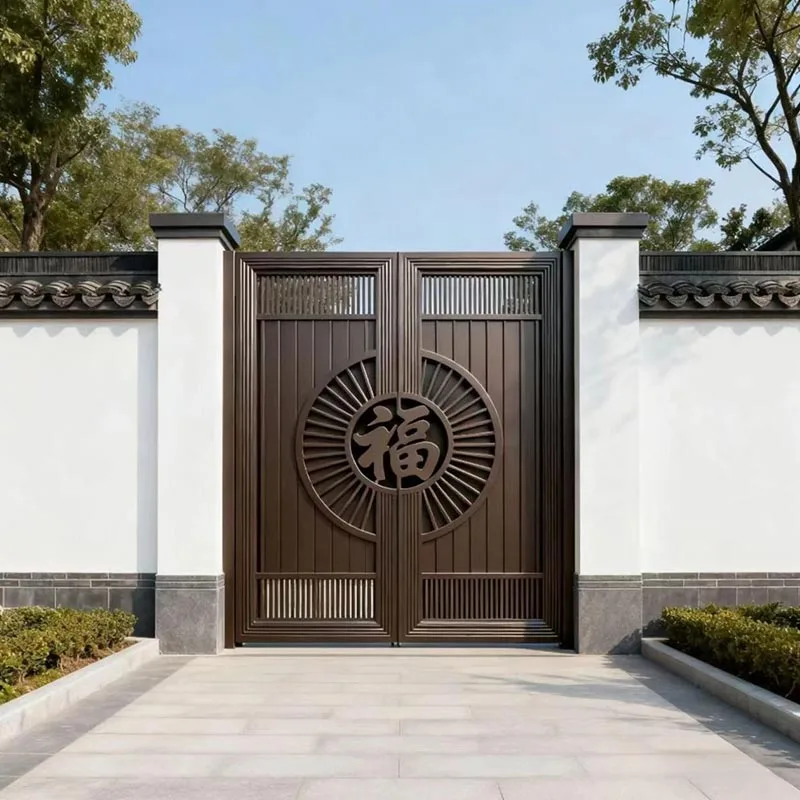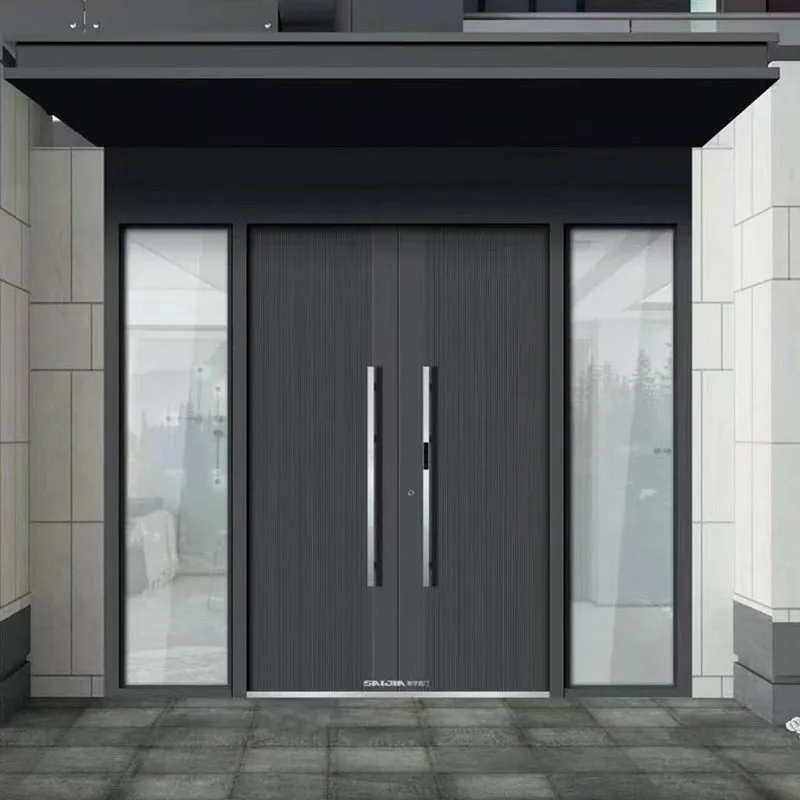

Cast aluminum lasts longer with far less upkeep, because it cannot rust. Wrought iron can match its lifespan, but only if you sand and repaint it every few years. In hot, humid, or coastal areas, cast aluminum wins clearly. Wrought iron still makes sense in dry climates when you want a true hand-forged look and are willing to maintain it.
Both metals can front a house for decades. The real question is not which survives, but how much work each one asks of you to get there.
We build cast aluminum doors for a living, so we have a side in this. But we have also repaired enough rusted iron gates at customer sites to speak fairly about both. This article walks through the two doors year by year, so you can see where the paths split. No sales spin, just what happens to each metal over time.
Everything in this comparison flows from one chemical fact. Wrought iron is mostly iron, and iron reacts with oxygen and water to form rust. Rust flakes, lifts the paint above it, and spreads underneath. Once it starts, it does not stop on its own.
Cast aluminum has no iron in it. When aluminum meets air, it forms a thin oxide skin that is hard and stable. That skin seals the surface instead of eating into it. This is why an aluminum boat hull survives salt water and an iron one does not.
On a wrought iron door, paint is not decoration. It is the only thing standing between the metal and rust. The day that paint chips at a corner or wears thin at a handle, the clock starts. On a cast aluminum door, the baked fluorocarbon coating is there for color and gloss, not survival. Even bare, the metal underneath will not rust.
Start with our full cast aluminum entry door buyer's guide for how these doors are cast, coated, and built.
Read the buyer's guideAverages hide the real story, so here is how ownership plays out over two decades in a normal climate with some sun and rain.
Both doors look new. Iron gets its factory primer and topcoat. Aluminum gets its baked fluorocarbon finish. No difference yet that a visitor would notice.
First rust spots appear on the iron door, usually at the base, the hinges, and any spot that gets touched. A repaint is due. The aluminum door still holds its color and needs nothing but a wipe.
The iron door has been sanded and repainted at least once, maybe twice. Skip it and rust creeps into the joints. The aluminum door is on its original finish and looks close to new.
By now the iron door has had three or four repaint cycles, and any neglected rust has pitted the metal for good. The aluminum door may have a slightly softer gloss, but no rust, no pitting, and no structural loss.
That timeline is the whole argument in one place. Both doors can reach year 20 looking respectable. One gets there on its own. The other gets there because someone kept working on it.
Wrought iron is denser than aluminum, so an iron door of the same size is noticeably heavier. That weight is not free. It pulls on the hinges and on the anchors that hold the frame to the wall.
Over years, a heavy leaf on an average hinge starts to droop. The door drags on the threshold and stops latching cleanly. We see this often on older iron gates, and the fix is rarely simple.
A cast aluminum door is solid but lighter, so it puts less strain on the swing. On our doors we still fit precision-cast stainless steel hinges rated to open up to 185 degrees without sagging, because even a lighter solid door deserves a hinge that will not quit. The lesson from both metals is the same: on any heavy door, the hinge is not a place to save money.
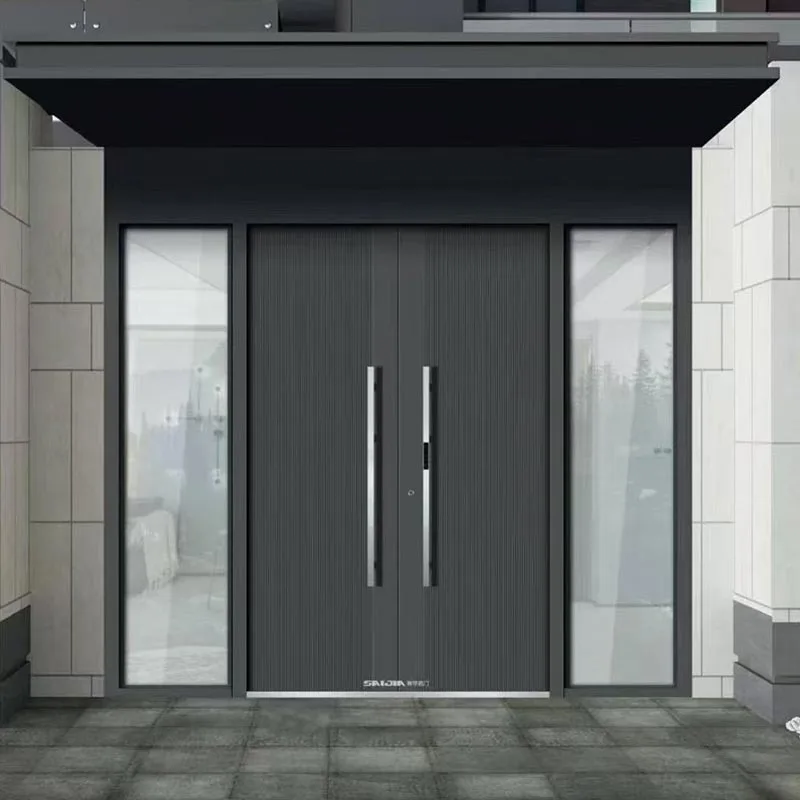
This is where we give iron its due. A hand-forged wrought iron door has a character that is hard to fake. The slight irregularities, the scrollwork, the hammered texture, these come from a person working hot metal. If your home leans traditional, Mediterranean, or old-world, iron has a romance to it.
Cast aluminum plays a different game. Because the panel is poured into a mold, it can hold deep, crisp relief that would be slow and costly to forge by hand. Floral panels, geometric carving, and sculpted scenes come out sharp and repeatable. If you want two matching doors with identical detail, casting does it easily. Forging does not.
Color is the other gap. Iron is painted, so it fades and needs refreshing. Cast aluminum takes a baked fluorocarbon finish in a wide color range, from matte black and bronze to wood-grain tones, and the color is baked into the surface rather than brushed on. Ten years in, the aluminum door is closer to its original color.
If you take one section to heart, make it this one. Where you live often decides the winner before taste enters the picture.
| Climate | Cast aluminum | Wrought iron |
|---|---|---|
| Coastal / salt air | Strong choice Wins | Rusts fast, high upkeep |
| Hot and humid | Unaffected Wins | Rust and condensation problems |
| Desert / strong sun | Color holds with fluorocarbon Wins | Paint chalks and fades |
| Dry and mild | Still excellent | Viable with upkeep Tie |
We ship a lot of doors to the Gulf and to coastal Southeast Asia for one reason. Near salt air, iron is a maintenance trap. Aluminum removes that problem entirely. In a dry inland climate the gap narrows, and iron becomes a fair option again if you like the look and accept the upkeep.
Tell us your location and we will recommend a finish and seal package built for it.
Ask for a climate recommendationA few years back a coastal resort project came to us to replace its entrance gates. The original set was wrought iron, installed maybe eight years earlier. From a distance the gates still looked grand. Up close they were failing.
Salt air had worked into every joint. Rust had lifted the paint along the bottom rails and around the hinges. The maintenance crew had repainted twice already, but paint over rust only buys time. The metal underneath was pitted, and two of the hinges had begun to sag from the weight.
We replaced them with cast aluminum gates carved to a similar pattern. Same grand look at the entrance, but no iron to rust in that sea air. The last time we checked in, the doors had gone years with nothing but a wash. That project is the clearest version of this whole comparison we can point to. Iron gave beauty and then a decade of fighting the coast. Aluminum gave the beauty and then quiet.
The point is not that iron is bad. In a dry courtyard inland, those original gates might have aged slowly and gracefully. Location is what turned a good-looking door into a maintenance headache.
Compare only the first invoice and the two doors look similar. A quality wrought iron door and a quality cast aluminum door land in overlapping ranges. The gap opens later, in the years after the door is hung.
| Cost over 20 years | Cast aluminum | Wrought iron |
|---|---|---|
| Upfront price | Mid to high | Mid to high |
| Repainting | None | 3 to 4 cycles |
| Rust repair | None | Likely at least once |
| Hinge / sag fixes | Rare | More likely from weight |
| Your time | A wipe now and then | Recurring weekends of work |
The honest summary: aluminum asks for more money on rare occasions and iron asks for a little money often, plus your labor. For most owners the aluminum path is cheaper and far less annoying. If you enjoy maintaining things by hand, iron can be a reasonable trade.
We would not tell you to pick aluminum every time. Iron is the better call in a few real cases.
Choose wrought iron when a hand-forged, one-of-a-kind look matters more than convenience, when your climate is dry and mild so rust is slow, and when you actually like the ritual of upkeep. A restored heritage home often calls for iron on authenticity grounds alone. Some buyers simply want metal shaped by a blacksmith, and that is a valid reason.
Choose cast aluminum when you want the look of ornate metal without the maintenance, when you live near salt or heavy sun, when you need two matching doors with identical carving, or when you would rather not think about your front door again for 20 years. That covers most modern villa and project buyers, which is why the category has grown so fast.
Send us your size and the iron design you are considering. We will show you the cast aluminum equivalent, with price and lead time, so you can compare like for like.
See cast aluminum doorsCast aluminum usually lasts longer with less work, because it cannot rust. A well-coated cast aluminum door holds up for 30 years or more. Wrought iron can match that, but only with regular sanding and repainting to keep rust in check.
Iron is a harder metal, but door strength depends on the whole build. A 4 to 12 mm solid cast aluminum panel with a reinforced frame and an anti-pry lock resists forced entry as well as most iron doors, and it weighs less.
Yes, once the paint chips or wears. Paint is the only barrier on iron, so any break lets rust start. Coastal and humid air speeds this up. Cast aluminum has no iron and cannot rust at all.
It can get close on ornate patterns, since casting holds deep relief and scrollwork well. It will not perfectly copy the hand-hammered texture of true forging, but for most designs the difference is subtle and the upkeep saving is large.
Both doors can last 20 years and look good doing it. The difference is who does the work. Wrought iron reaches old age because someone sands and repaints it on schedule. Cast aluminum reaches old age on its own, because there is no rust to fight.
If you love hand-forged metal, live somewhere dry, and enjoy the upkeep, iron is a fine and beautiful choice. For everyone else, especially near coasts and strong sun, cast aluminum gives you the ornate look, the security of a solid panel, and a door you can mostly forget about.
Send us the size and the iron design you are weighing, and we will price the cast aluminum equivalent so you can compare the real numbers side by side.