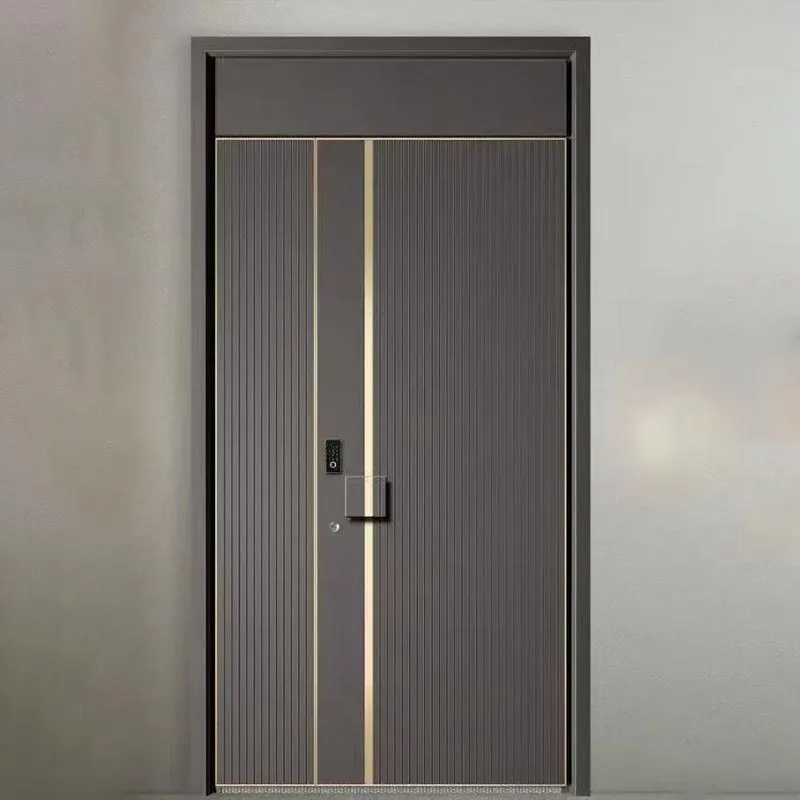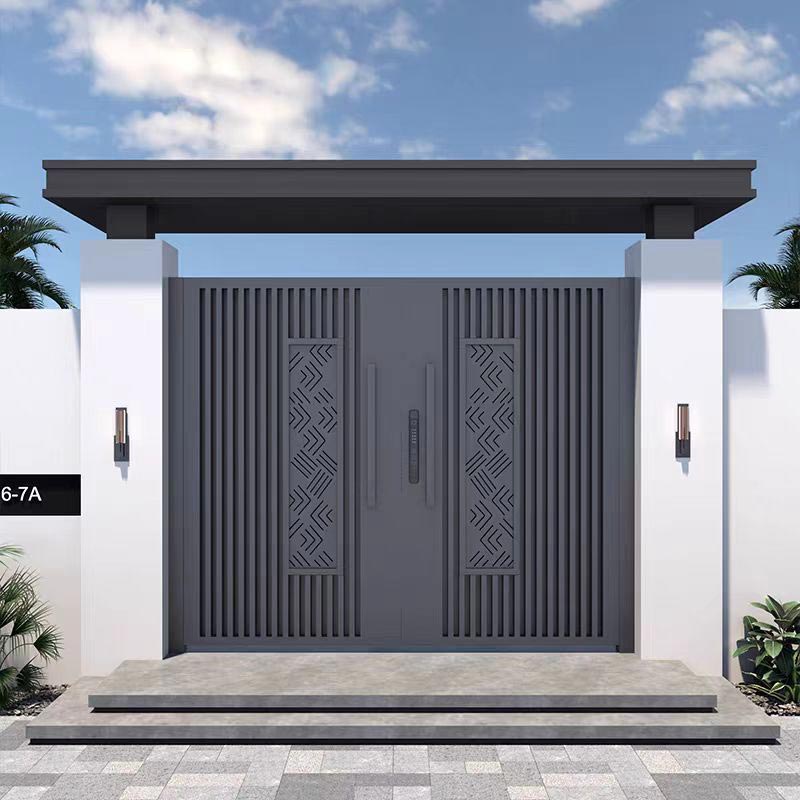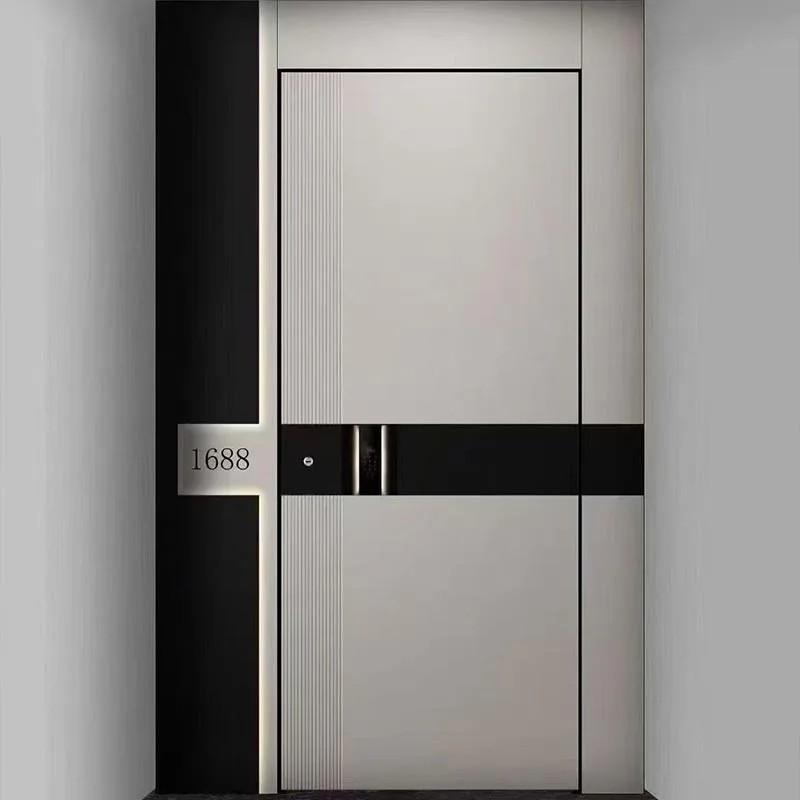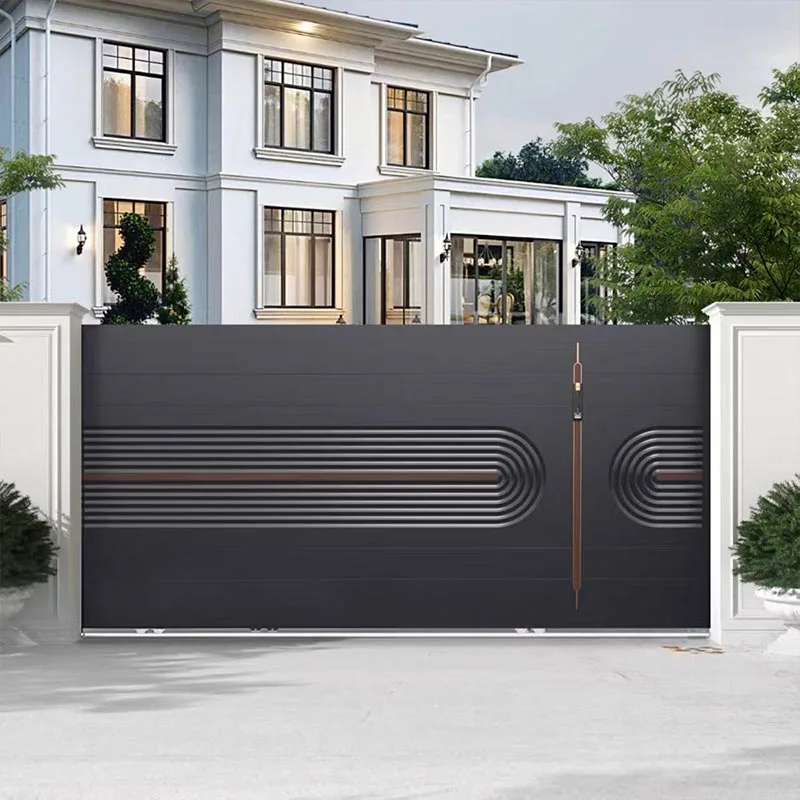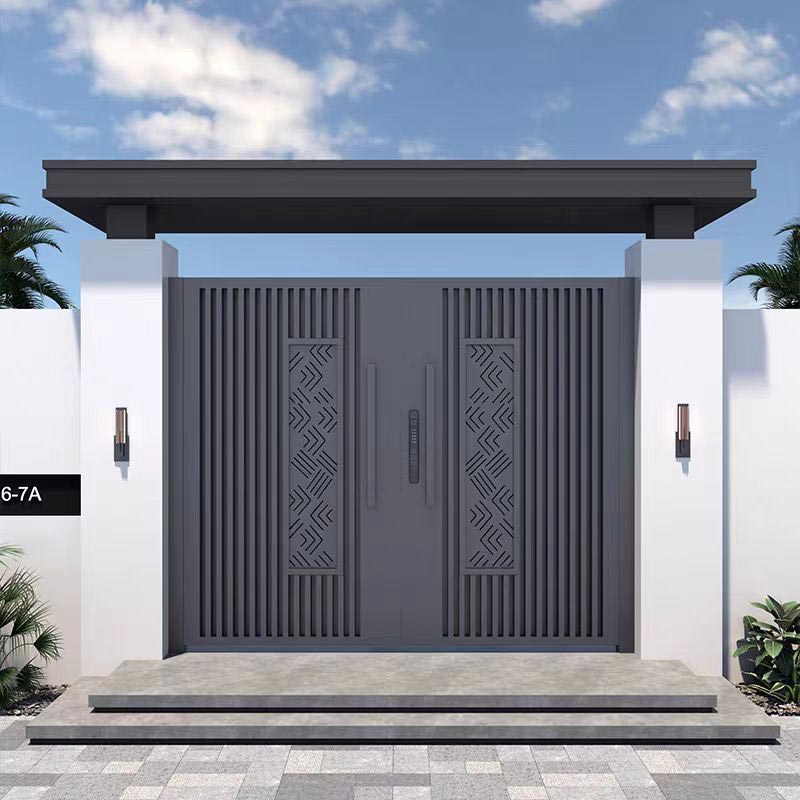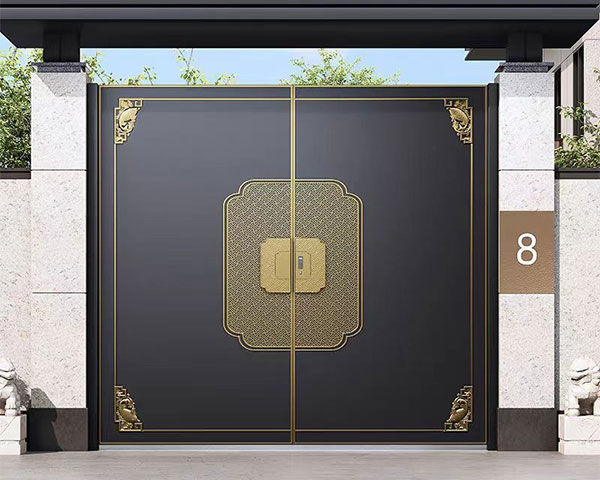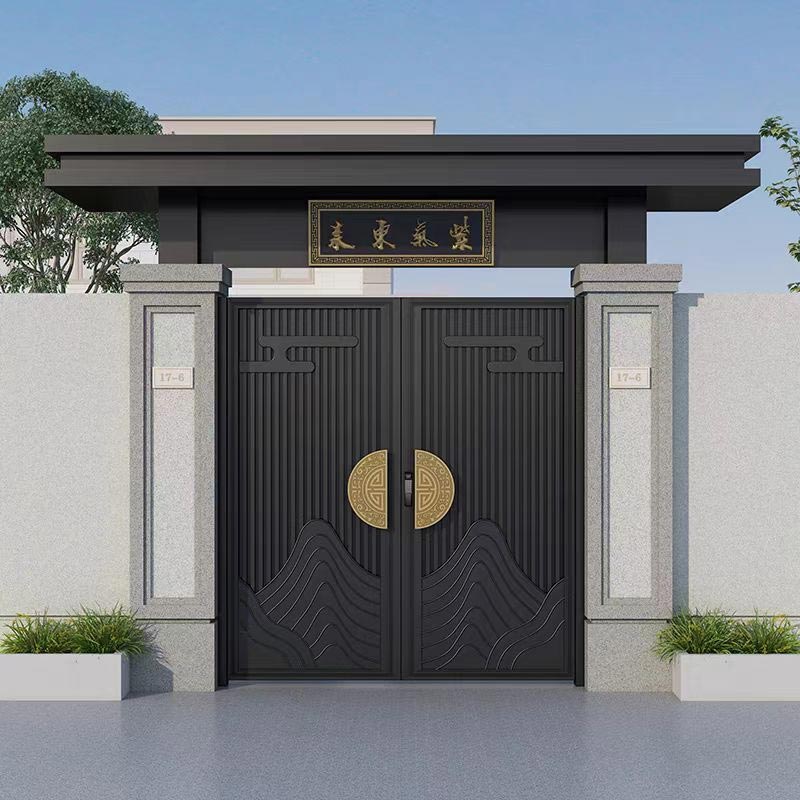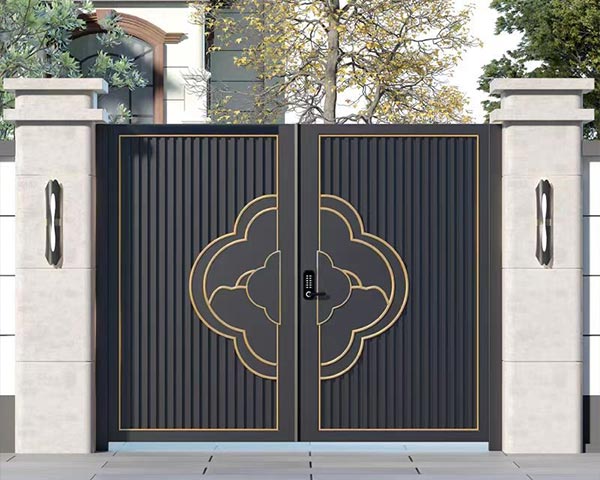

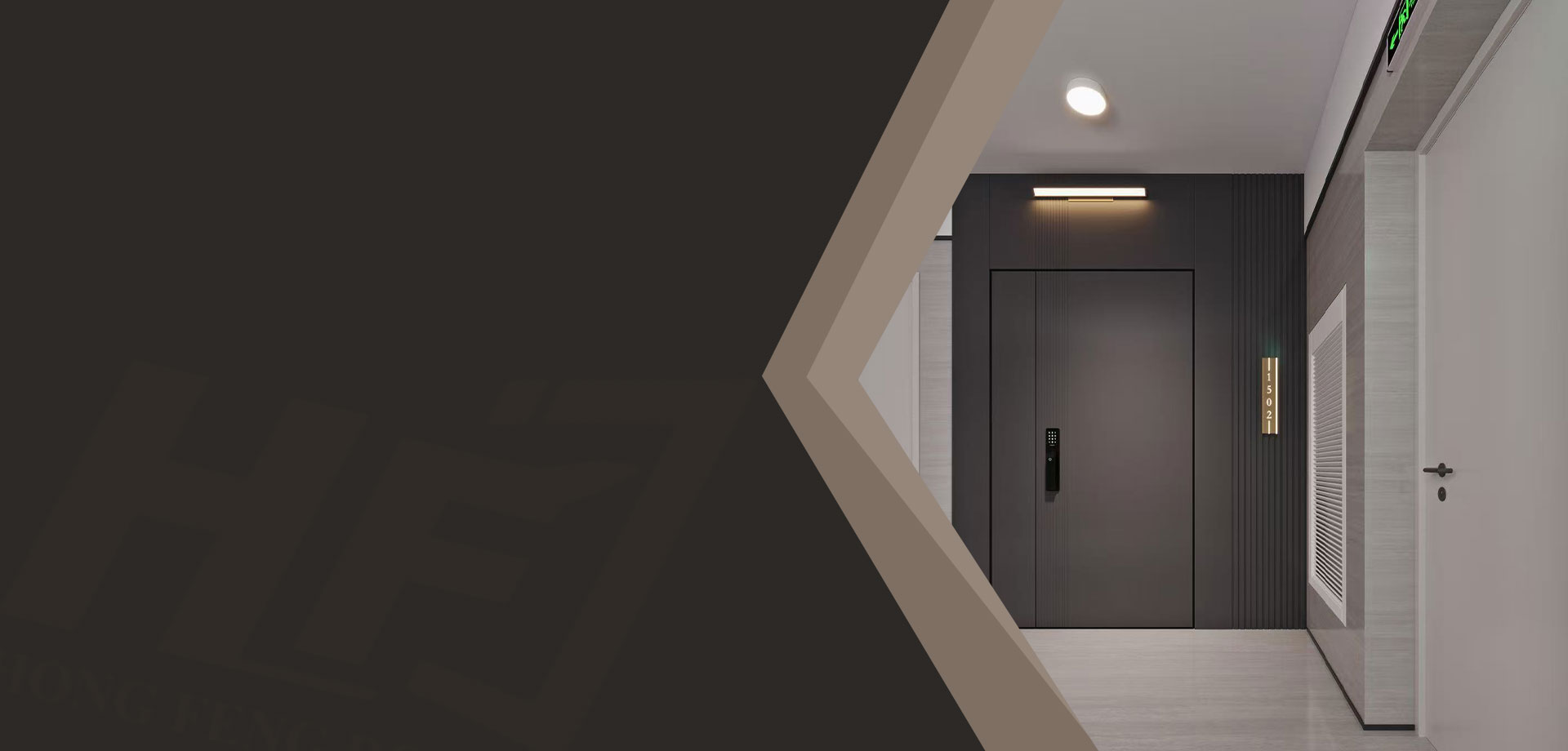
A cast aluminum entry door is a door whose main panel is poured as one solid piece of aluminum alloy, not welded from thin sheets. That single fact is why these doors do not rust, do not warp in the sun, and are hard to force open.
We have cast, carved, and shipped these doors from our workshop in Ninghai for close to two decades. So this guide is written from the factory floor, not from a catalog. Below you will see how a cast aluminum door is actually made, how it holds up against iron, steel, and wood, what it should cost, and how to order one without expensive mistakes. If you are choosing an entrance for a villa, a courtyard, or a project, this is the door category worth understanding first.
The name describes the process. Molten aluminum alloy is poured into a mold and cooled into a single thick slab. That slab becomes the door panel. Most other metal doors are built the opposite way: thin sheets are cut, bent, and welded around a hollow frame, then filled with foam.
The difference matters the moment you touch one. A cast panel feels dense and heavy. Knock on it and there is no drum-like echo. Our standard panels run from 4 mm on lighter designs up to 12 mm on heavy carved gates. There is no cavity for water to sit in and nothing to peel apart at a seam.
We use an aviation-grade aluminum alloy for the pour. It gives a fine grain and a tight surface, which is what lets the carving hold sharp edges. You will also hear the category called cast aluminium doors, aluminum casting doors, or engraved aluminum gates. They all point to the same idea: one poured piece instead of a welded box.
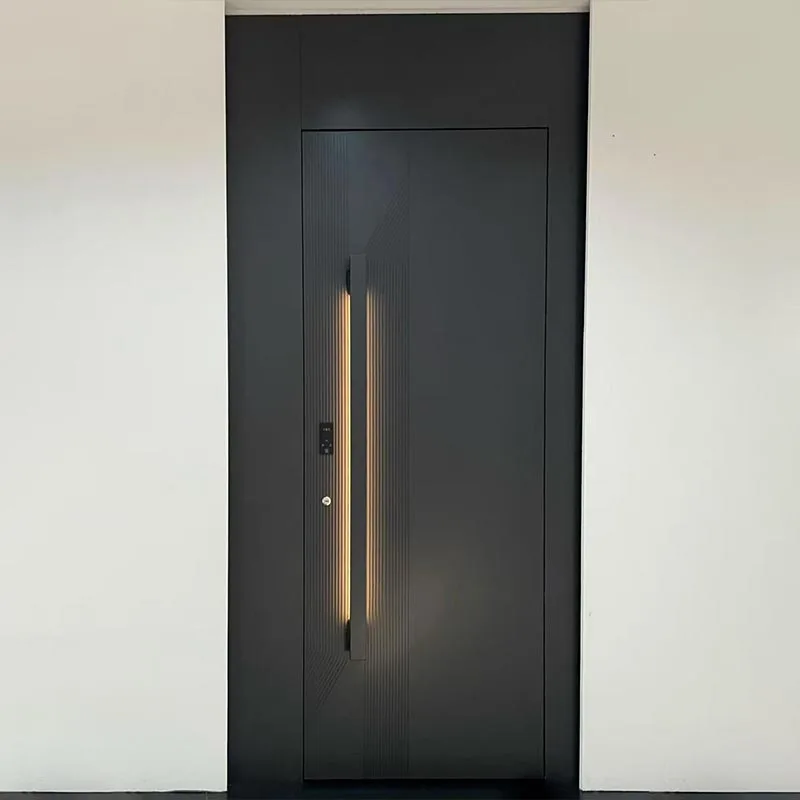
Browse our current cast aluminum door range, with panel thickness and finish listed for each model.
View cast aluminum doorsThis is the part most buyers never see, and it is where quality is won or lost. Here is the real sequence we run.
A pattern is carved first, usually a relief design for the panel face. From that pattern we build the casting mold. Deep reliefs need a precise mold, because the metal has to flow into every recess before it cools.
We pour the alloy and press it under hydraulic force so the metal packs tight against the mold. This raises the density and removes air pockets. The panel comes out as one piece, with the carving already part of the metal. It is not glued on and not stamped into thin sheet. A welded hollow door skips this whole stage, which is why it weighs a fraction as much.
After casting, the panel goes to our engraving machines for detail work. These run in long continuous cycles to keep the cut consistent across matching doors. On a carved pattern, this step sharpens the lines the mold laid down.
Bare aluminum needs protection to keep its color outdoors. We use a multi-layer fluorocarbon system, applied by electrostatic spraying and then baked at high temperature. Our line runs Tiger brand super weather-resistant fluorocarbon paint. Fluorocarbon is the same class of finish used on aluminum building facades, because it holds color against sun and salt for decades.
We fit automotive-grade EPDM rubber seals around the leaf. This is the same rubber used on car doors, chosen because it stays soft and does not harden or crack with age. Then the lock body, hinges, and frame go on, and the door is checked before packing.
One point from experience: a cast door is heavy, so the hinge is not a minor part. We use precision-cast stainless steel hinges rated to swing the leaf up to 185 degrees without sagging over time. A weak hinge on a heavy door drops within a year, and then the door drags. That single component causes more callbacks than almost anything else, which is why we do not cut cost there.
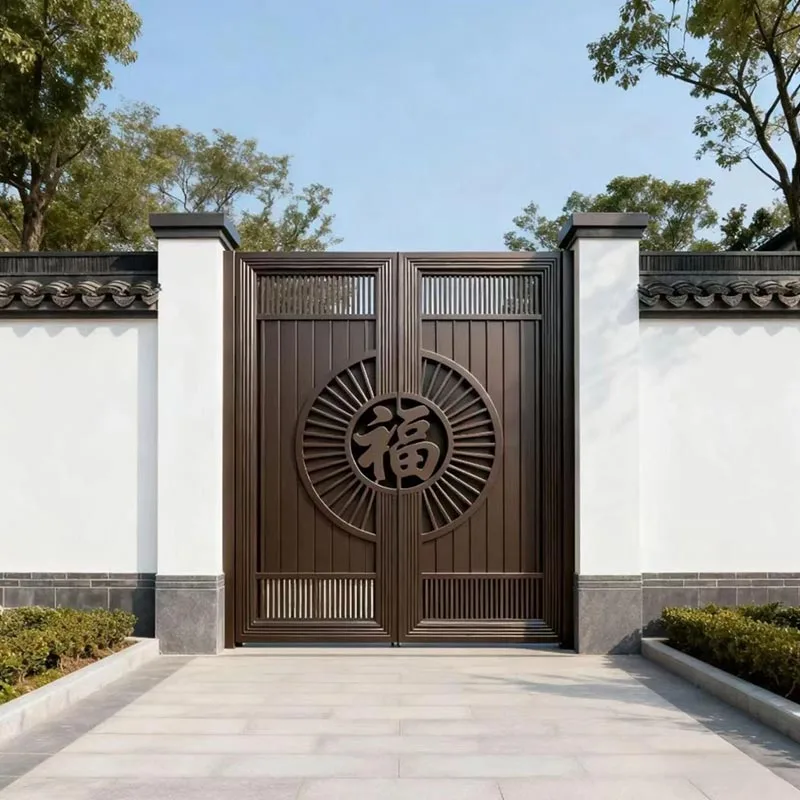
Buyers almost always compare these four. Here is how they line up on the things that actually decide a purchase.
| Factor | Cast aluminum | Wrought iron | Steel (hollow) | Solid wood |
|---|---|---|---|---|
| Rust | Cannot rust | Rusts without upkeep | Rusts if the skin is scratched | Cannot rust, but rots |
| Weight | Heavy and solid | Very heavy | Light and hollow | Heavy |
| Weather | Handles sun, salt, and rain | Needs regular sealing | Dents and fades | Swells and warps |
| Security | Solid panel, hard to pry | Strong, but bars leave gaps | Cavity can be forced | Strong until it rots |
| Carving detail | Deep, cast into the metal | Forged, limited fine detail | Stamped, shallow | Carved by hand, cracks over time |
| Upkeep | Wipe clean | Sand and repaint | Touch up dents | Reseal and revarnish |
The short version: iron looks the part but fights you on maintenance. Hollow steel is cheap but hollow. Wood is beautiful and needs constant care. Cast aluminum gives you the weight and detail of iron without the rust, and the security of a solid panel without the rot of wood. That combination is why it took over the high-end villa market.
There is one honest trade-off. A quality cast aluminum door costs more than a hollow steel door up front. You are paying for solid metal and a baked fluorocarbon finish. Over 20 years the math favors aluminum, since you skip the sanding, repainting, and rust repair. But the first invoice is higher, and it is fair to know that going in.
No, they do not rust. This is the single most common question we get, so here is the full answer.
Rust is iron oxide. It only forms on metals that contain iron, like steel and wrought iron. Aluminum has no iron. When aluminum meets air it forms a thin, hard oxide skin that seals the surface and stops further reaction. That is the opposite of rust, which flakes and spreads.
Fading is the more reasonable worry, and it comes down to the coating. A cheap paint chalks and dulls within a few years of strong sun. Our fluorocarbon finish is built for the opposite. Baked at high temperature and applied in multiple layers, it holds color for roughly 20 to 30 years in most climates. This is why we push fluorocarbon over standard powder coat for any door facing direct sun or coastal air.
For a house near the sea, aluminum is often the only sensible metal choice. Salt air destroys iron fast. We ship a lot of doors to the Gulf and to Southeast Asian coasts for exactly this reason. The EPDM seals help here too, since they keep wind-driven rain and dust out of the frame.
Ask us to spec a marine-suitable finish and seal package for your climate.
Request a climate specA door is only as strong as its weakest point. On a hollow steel door, that point is the cavity. A pry bar in the right spot can peel or bend the thin skin. A solid cast panel gives an intruder nothing to grab.
Our cast aluminum security doors are built to a super Class A anti-theft rating, which is the top consumer grade in the Chinese standard. The lock is an anti-pry steel shield body, and many models take a fingerprint lock. The leaf is thickened and the frame reinforced, so the whole assembly resists force, and the frame holds even when the lock itself is attacked.
Here is a detail that gets missed. Security is a system, not a single part. A strong lock in a weak frame still fails, because the frame gives first. So we match the frame, the hinge, and the lock as one unit. On our anti-theft cast aluminum doors, the reinforced frame is part of the base build, not an upsell.
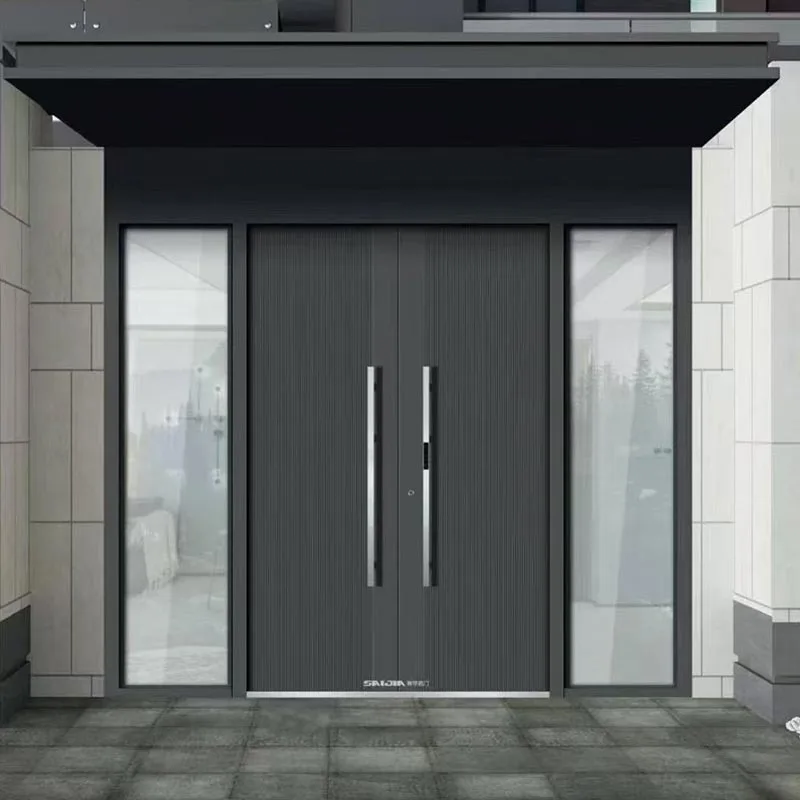
Because the panel is cast, the design freedom is wide. The mold can hold deep relief, so patterns look sculpted rather than printed. These are the main directions buyers choose from.
Carved cast aluminum doors. Deep relief patterns cast straight into the metal. Good for a formal, ornate entrance. See the carved cast aluminum range.
Courtyard gates. Double-swing gates for villa and garden entrances, often with a thermal break profile for the climate. Browse courtyard cast aluminum doors.
Pivot doors. A modern look where the door turns on a central spindle instead of side hinges. Cast aluminum suits pivot designs because the solid panel stays flat and true. See our pivot door models.
Finish and color. The fluorocarbon system comes in a wide color range, from matte black and bronze to wood-grain and metallic tones. Since the finish is baked on, the color is part of the door, not a film that peels.
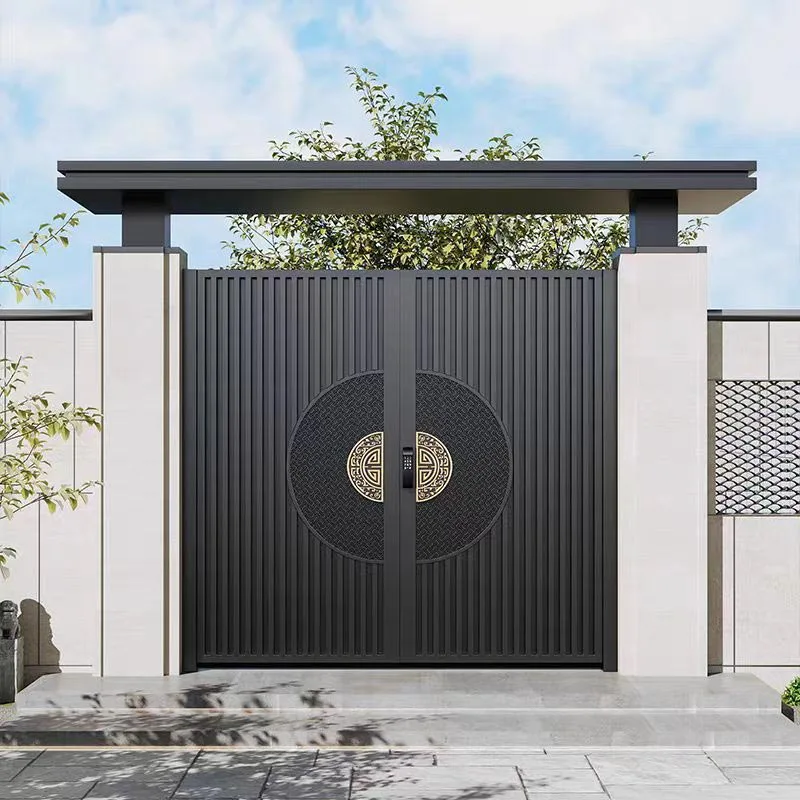
Factory pricing for a single cast aluminum entry door usually falls between about 1,200 and 6,000 US dollars. Double doors and large carved courtyard gates run higher. Retail prices in your local market will add import, margin, and installation on top. Treat these as factory-level ranges, and always confirm with a real quote for your size.
Five things move the price:
A note on very cheap quotes. If a price looks far below this range, something was cut. Usually it is panel thickness, coating quality, or the hinge. Those are the three costs a factory can hide, and they are the three that decide whether the door still looks good in ten years. We would rather explain our number than win on a price we cannot build honestly.
Most problems on an imported door trace back to the order stage, not the factory. Here is how to get it right.
Measure the rough opening width and height in three places each, and use the smallest number. Note which way the door should swing and where the lock side sits. A door built to a guessed size is the most expensive mistake in this whole process. When in doubt, send us photos and your measurements, and we will check them before cutting.
Get panel thickness, coating type, lock model, hinge type, and color code written on the order. Vague orders lead to vague doors. A clear spec protects both sides.
Cast and carved doors are made to order, so build time is real. Ask for the lead time before you commit to an install date. For export, ask how the door is crated, since a heavy panel needs proper bracing to arrive undamaged.
Check what happens if a part needs replacing after it lands in your country. We run a measure-to-after-sales service and keep 24-hour response, because a door problem cannot wait a week when it is your front entrance.
Send us your sizes and a photo of the entrance. We will confirm the spec, price the exact door, and give you a lead time before you commit.
Contact the Hongfeng teamNo. Aluminum contains no iron, so it cannot form rust. It grows a thin oxide layer that protects the metal underneath. A baked fluorocarbon coating adds a second barrier against salt, sun, and rain.
Yes. A solid cast panel is 4 to 12 mm thick with no hollow cavity to pry open. Combined with a Class A anti-pry lock, a reinforced frame, and cast stainless hinges, these doors reach high security ratings.
A single door usually runs from about 1,200 to 6,000 US dollars at the factory level. Double doors and carved courtyard gates cost more. Size, panel thickness, carving depth, glass, and hardware set the final price.
Commonly 30 years or more. Aluminum does not rot or rust, and a quality fluorocarbon finish holds color for two to three decades in most climates. The hinges and lock are the parts most likely to need service over that span.
Yes. Size, carving pattern, color, glass, lock, and swing direction are all made to order. Send your opening size and a design reference, and we will build to it.
If you want an entrance that survives sun, salt, and years without babysitting, cast aluminum is the category to start with. The solid poured panel is what gives you the whole package at once: no rust, no rot, deep carved detail, and real resistance to forced entry. It costs more than a hollow steel door up front, and that is a fair trade for a door you stop thinking about after it is installed.
The two things that separate a good cast aluminum door from a poor one are the coating and the hinge. Get those right, confirm your sizes, and put the spec in writing. Do that, and this is a door that outlasts most of the house around it.
When you are ready, send us your opening size and the look you want. We will price the exact door and tell you the lead time before anything is cut.